India and Europe: a window of convergence
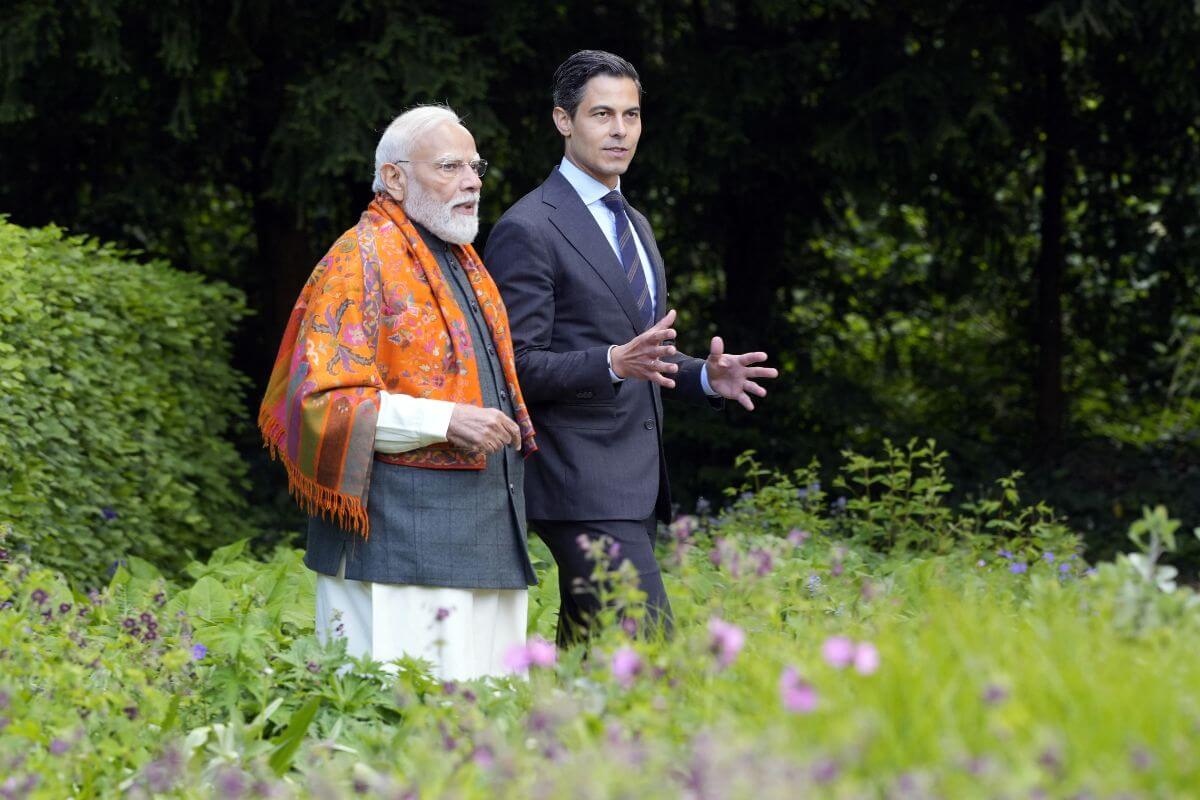
On May 21, 2026, Indian Prime Minister Narendra Modi returned to Delhi after concluding a five-nation tour across the UAE and Europe. This series of visits is far more than a simple diplomatic routine. At its core, the tour aimed to ensure continuity of oil and LPG supply, as well as deepen economic and security cooperation with Europe.
Power and vulnerability
Modi’s visits came at a peak of domestic popularity, as the April-May state elections boosted the Bharatiya Janata Party (BJP) and its allies, which now control 21 of India’s 28 states, covering roughly 80% of the population and 72% of its territory. Such dominance has not been seen since the 1970s, when Indira Gandhi and the Indian National Congress held comparable political control.
Read also: What India wants: global influence and freedom of choice
Yet, as Modi leads from a solid foundation of a renewed electoral mandate, his government must navigate several challenges, from China’s regional assertiveness to the shockwaves coming from the war in West Asia and the volatility of energy markets.
Against this backdrop, while holding domestic comfort, Modi’s touring of the UAE and Europe was not a simple diplomatic gesture. Every stop on his itinerary was carefully chosen and choreographed to deliver concrete actions, such as supply guarantees, technology partnerships and framework agreements. The tour was, in that sense, a stress test of India’s multi-alignment doctrine which, so far, seems to be passing the test.
The UAE and the energy imperative
PM Modi first stop was in Abu Dhabi; this was probably the most urgent visit before landing in Europe. Indeed, since two thirds of gas and crude oil imports come from the Gulf, the closure of the Strait of Hormuz is a real concern for New Delhi, and has made a direct hit on its economy. The government publicly asked Indian citizens to reduce petrol consumption and limit gold imports in the name of national interest, signaling its serious exposure. The meetings in Abu Dhabi with President Mohamed bin Zayed, on May 15, delivered concrete commitments on oil and LPG supply continuity, together with a $5 billion investment pledge directed at job creation and market strengthening, as well as a defense cooperation framework.
Furthermore, the visit carried a normative register that deserves attention. Modi reaffirmed New Delhi’s position as a potential contributor to stability in the Gulf, seeking to present itself as an indispensable power in the international order.
An emerging EU-India partnership architecture
If Abu Dhabi was about securing India’s energy lifeline and reaffirm India’s role as a sustainer of peace and stability in West Asia, the European leg of the tour was about diversification, from technology access, trade frameworks and investment flows, to political backing. In five days, from May 15 to May 20, Modi visited the Netherlands, Sweden, Norway and Italy.
The context matters here, and cuts both ways. Europe needs India as much as India needs Europe, arguably more so than at any point in the post-Cold War period. Indeed, after the Trump administration’s tariff policy, European capitals have been forced to reckon seriously with partner diversification. The image of Trump’s recent meeting with Xi in China hangs as a reminder to European leaders to take alternative pathways, and India, with its scale, its democratic credentials, its technological ambition, and its deliberate distance from both Washington’s coercive instincts and Beijing’s orbit, fits that route.
The northern leg: trade, technology and multilateralism
During the first European stop in The Hague, Modi signed a strategic partnership with the Netherlands covering trade, technology and energy. In Stockholm, the meeting with Prime Minister Kristersson and the joint appearance with Ursula von der Leyen at the European Round Table for Industry gave another signal. The meetings showed that, besides a bilateral relationship between India and individual European states, there is a broader India-EU architecture taking shape.
The EU-India Free Trade Agreement, long stalled before its finalization in January 2026, now has significant political wind behind it. Von der Leyen described it as the “mother of all agreements”, a characterization that reflects both the ambition and the stakes of what is being negotiated. Furthermore, at the Nordic Summit in Oslo, five Nordic leaders sat in one room with Modi, to discuss technology, renewables, defense, space, and the Arctic. The specific agreements on green energy and artificial intelligence are a signal of both India’s and EU’s intention to shape the global conversation around climate change, resources and AI governance. Besides, the Nordic summit testifies a broadening of India’s interest in the Artic as an emerging geographical frontier, and a further acknowledgement from the European States of an increasing competition taking shape in this area.
Rome: political chemistry and the Indo-Mediterranean vision
By no coincidence, Rome was the final leg of the tour. Italian Prime Minister Georgia Meloni and Modi have a well-known personal rapport; the political chemistry between the two leaders is what differentiates Italy-India relations from the ones with the other EU member states, and is among the key drivers of what has become a genuinely deepening partnership. Importantly, this was their first standalone bilateral visit, as previous encounters took place in the margins of multilateral meetings such as G20 summits.
In Rome, both sides elevated their ties to a special strategic partnership. Several memoranda of understanding were signed, spanning defense cooperation, critical technologies, agriculture, traditional medicine, connectivity, education, culture, research, and mobility. Trade and investment emerged as a central focus. In this respect, the launch of the EU-India Free Trade Agreement is expected to strengthen Italy-India economic ties further, and both countries have set a target of raising bilateral trade to €20 billion by 2029, alongside a push for stronger private sector partnerships. A final and important element to highlight in the visit is the emergence of a clear Indo-Mediterranean vision. This vision was made visible in a co-authored article by Meloni and Modi that was published on both Corriere della Sera and the Times of India.
The term, which intuitively demarcates a geographical space stretching from the Indian western coastline to the Mediterranean basin, going through the Arabian Sea and the Gulf, is now purposively used to articulate a vision which goes beyond a simple geographical scope. It embeds trade, broader geopolitical opportunities and a clear signal of political agency, positioning Italy and India as natural partners and guardians of a shared maritime and commercial corridor, at a moment of significant stress for supply chains. Concretely, this vision intersects with several ongoing initiatives, among which stands the India-Middle East-Europe Economic Corridor (IMEC), to which both countries are connected.
Implications for Europe
There is a fil rouge running across all these stops, which is India’s ambition to cease being described as an “emerging power” and insisting to be treated as an indispensable one, whose choices about alignment, investment and supply chains matter to everyone else’s calculations – Europe’s included.
As Europe seeks its own diversification, India is certainly one of the most compelling outlets on that path. Crucially, India does not want to be the world’s factory. It wants to become a high-tech platform that offers solutions in clean energy, digital infrastructure, space and advanced manufacturing. That ambition aligns, more than is often acknowledged, with what Europe will need from its partners in the years ahead.
Read also:
L’IMEC al centro della cooperazione strategica tra India e Unione Europea
Hormuz e il Golfo Persico: microcosmo di un riassetto globale
At the Raisina Dialogue 2026, Finnish President Alexander Stubb put forward the concept of “value-based realism”, or the idea that a country can stand firmly by the values it considers central, while remaining ready to engage in dialogue and cooperation with countries that do not necessarily share them. It is a formulation that captures something true about how Europe should operate, particularly in its relationship with India, and it is precisely what makes India legible to European partners navigating the tension between principle and pragmatism. While limitations persist, such as the divergent positions towards Russia, trade and data governance, approaching India through value-based realism would allow to overcome some of these challenges.
The deeper question is then whether this moment of parallel vulnerability can be converted into something more durable. Signs are encouraging, as Europe and India have never been as close to genuine strategic convergence as they are today. Albeit neither side wants to lock in too early; the current momentum, the political will, and the conjuncture are visible and uniquely favorable. Taken together, both the bilateral and multilateral meetings of Modi’s tour read as a deliberate construction of a partnership architecture. The same bilateral partnerships between single Member States and India can reinforce the wider EU-India agenda, by demonstrating political will, building trust, and delivering concrete results. If sustained, in practical terms, this convergence would mean more resilient supply chains, joint investments in clean energy and digital infrastructure, deeper defense-industrial cooperation, and greater coordination on AI and critical technologies. Politically, it may also accelerate Europe’s search for strategic autonomy by expanding its partnerships beyond the traditional transatlantic framework.
For the European Union, deepening its relevance in India’s strategic calculations is thus not just an opportunity, but rather an available and promising direction in a world where old anchors are loosening and new ones are still being cast.