During a recent parliamentary debate on the normalization of violence in politics and society, Lidewij de Vos, leader of the far-right party Forum for Democracy (FvD), argued that the Dutch must continue to form the majority in their own country and that the “original Dutchman is white”. Right-wing MP Mona Keijzer reacted indignantly and walked to the interruption microphone to demand an explanation. “Are you saying,” she said, “that the Netherlands is only for white Dutch people?”
Well, said De Vos. That was not how one should look at it. She wants the Netherlands to remain for the original Dutch ethnic people, and to let the Dutch continue to form a majority in their own country. And, she explained, the fact that those ‘original’ people happened to be ‘white’ was simply a fact of life—she couldn’t do anything about that either. “You are falling below a threshold,” said Keijzer. “You are falling below a minimum standard”, pointing out that she does subscribe to the Dutch values of tolerance and pragmatism, whereas de Vos does not
A clash like this between two right-wing MPs has become very normal in Dutch politics, where six small right-wing opposition parties are in fierce competition. The main question: Who is the most right wing and the hardest on migration, integration, and the preservation of Dutch culture, norms, and values? The urge to stand out is strong, which is due to the fragmentation on the right side of the Dutch parliament, de Tweede Kamer.
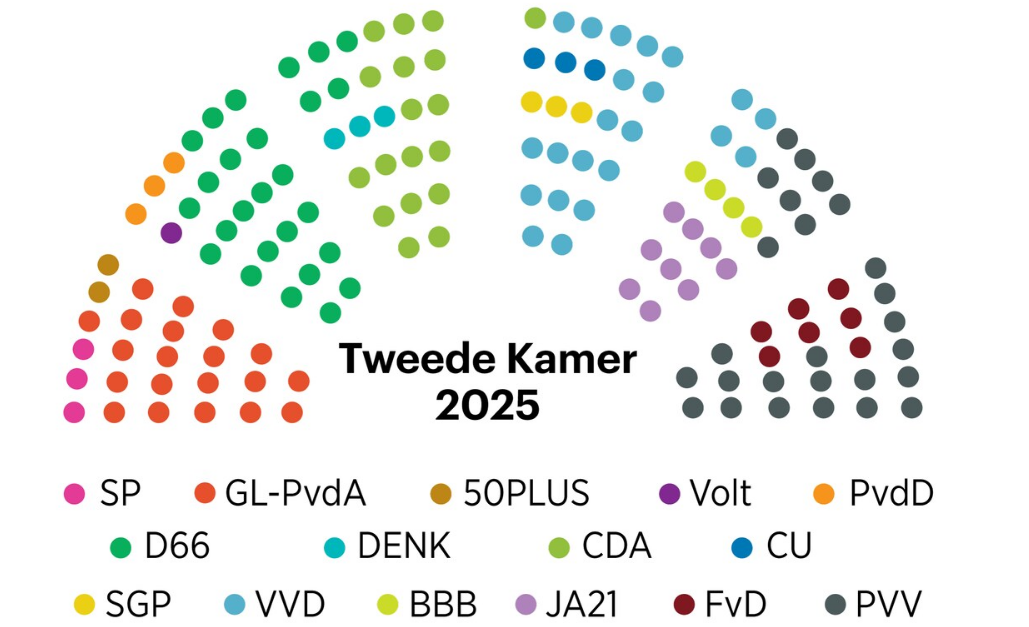
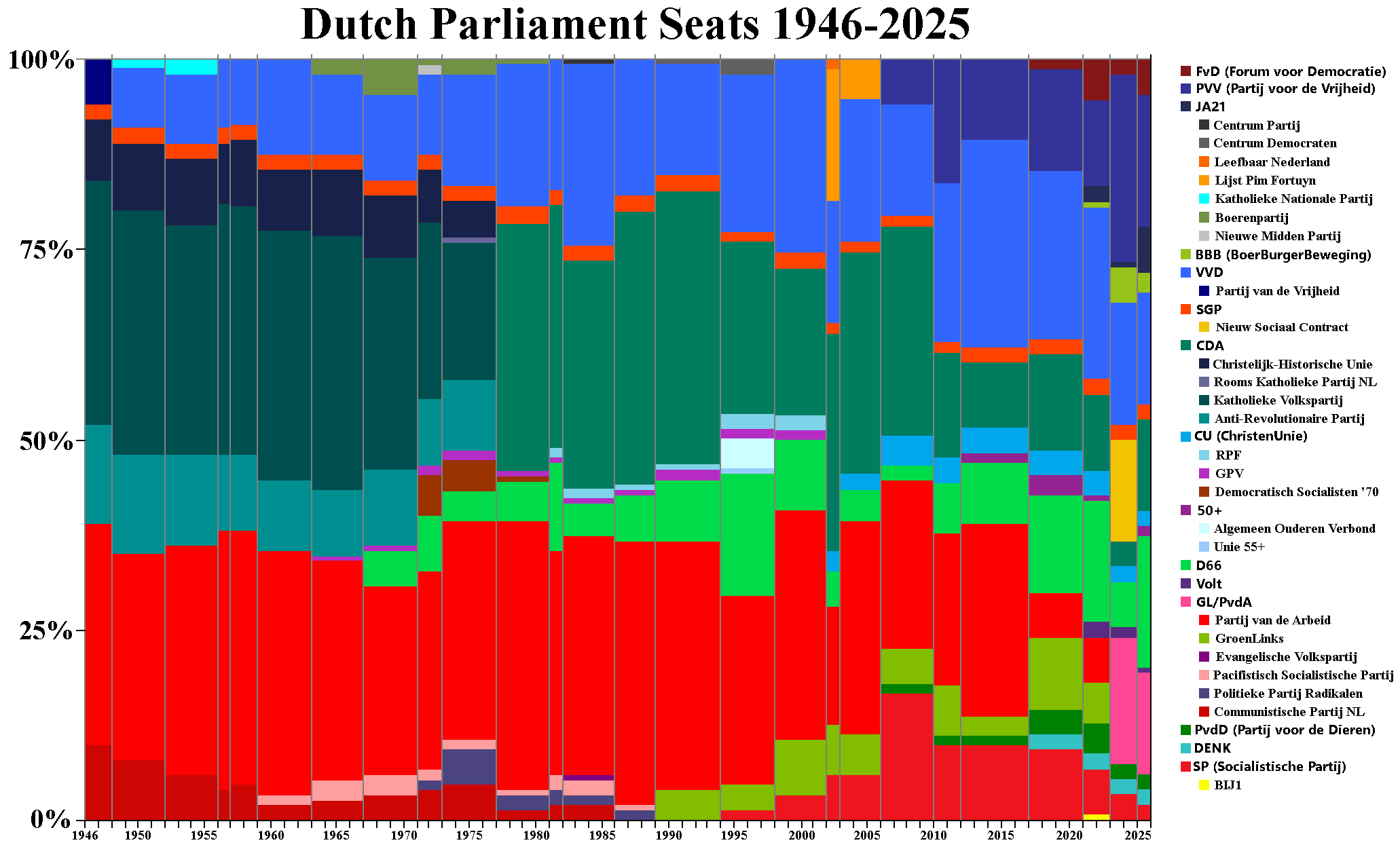
How come? The Dutch electoral system is one of the most proportional in the world. There is no significant threshold, and even small parties are able to gain representation with a relatively modest share of the vote. This institutional design produces a predictable outcome: Fragmentation is not an anomaly but a structural feature of the system. On the right, this effect is amplified by ideological fluidity among voters.
To face another fact: Many right-leaning voters in the Netherlands are not permanently attached to one party. Instead, they shift between options depending on leadership appeal, perceived credibility on migration, and the broader political mood.
Read also: The Dutch election results and a European model of political restraint
Currently, the Dutch parliament counts a huge section of right-wing parties. These include the traditional ones, such as Christian Democrats (CDA), right-liberals (VVD) and orthodox protestant Christians (SGP), but also more new, populist parties such as the Freedom Party (PVV) of Geert Wilders, the Farmers’ Party (BBB), the conservative-nationalistic ‘Right Alternative ‘21’ (JA21), and the far-right FvD.
On top of this, there are so-called separatists in Parliament, who recently broke away from their party, such as Group Markuszower – seven MPs from the PVV who rebelled, went their own way and established their own group – and Mona Keijzer, a former vice prime minister of the Farmers’ Party who separated herself after a quarrel on the party’s leadership. She now stands alone with one seat in parliament.
Though new elections aren’t around the corner, almost all of these rightist parties are competing for right-leaning voters by making tough statements on issues such as migration, integration, Israel, Dutch culture and values, and the position of Islam in society. Every week there are clashes amongst them in parliament, with much displayed on social media. Furthermore, they also clash with the parties in government and with the left-wing opposition parties in parliament.
How did it all come to this? After Geert Wilders blew up his own right-wing cabinet, in June 2025, snap elections followed in October. Left-liberal party D66, which was subsequently allowed to take the lead in forming a new government, narrowly won. Because D66 leader Rob Jetten decided to cooperate with traditional right-wing parties CDA and VVD, but refused to talk to one of the smaller right-wing parties, and because VVD leader Dilan Yesilgöz refused to cooperate with left-wing parties; a minority cabinet of D66, VVD and CDA had to be formed.
Such a cabinet is a rarity in Dutch politics, which has a tradition of majority cabinets who govern in broad consensus style. The new cabinet of 38-year-old Prime Minister Jetten also made no prior agreements with opposition parties regarding its plans. It is therefore now dependent on ad hoc support from the opposition.
On the one hand, coalition party D66 still refuses openly to cooperate openly with the section of small, right-populist, conservative, nationalist, and radical parties in the opposition. On the other hand, their coalition partner VVD keeps on refusing to make a deal with the leftist opposition, since its front woman Yesilgöz solemnly promised her voters not to do so.
With the ruling parties in deadlock, more pessimism has taken over Dutch politics. And as the overall majority of the voters is still right leaning, they are looking for the one person who could lead the country forward. But who will it be?
First, there is Madame Yesilgöz, who transformed the course of her right-liberal party VVD into a light version of Geert Wilders’s PVV. Therefore, many PVV-voters jumped ship in October. However, right now, they are already disappointed. Yes, she kept her promise to not seek cooperation with leftist parties, but her move to form a government with left-liberal D66 has made many of these voters weary and insecure. Is this what they asked when they left the PVV?
Most of these PVV-voters shifted because of its unreliable leader, Wilders, who didn’t keep his promises in the previous right-wing cabinet and who suddenly decided to destroy it. After the October elections, Wilders returned in opposition. Ever since, he has shouted against almost every proposal of the new government. For now, he has lost his appeal and is not an attractive alternative for right-leaning voters, especially after seven of his MPs revolted and broke away. Under the leadership of Gidi Markuszower, they have formed their own group and are trying to construct a new right-wing populist party.
Next to this, there’s JA21, a small rightist party with a more realistic approach. It is led by former FvD-party members who could not tolerate anti-Semitism in their former party. Since its founding in 2021, JA21 has been building a party structure with a conservative and nationalist message, but with a more reasonable sound. Frontman Joost Eerdmans is also one of the disciples of Pim Fortuyn, who was assassinated in 2002 by an animal rights activist. Eerdmans has a more practical approach, which is a challenge to be successful in a time when extreme and sensational outings rule in online algorithms.
Finally, there is the Farmers’ Party (BBB), which emerged in the Netherlands following the farmers’ revolt due to the issues surrounding the rules regarding maximum nitrogen levels. In the 2023 parliamentary elections, the party grew from one to eight seats, after which it joined a right-wing cabinet with the PVV, among others, that ultimately lasted less than a year. And in the subsequent elections, the BBB dropped from eight to four seats.
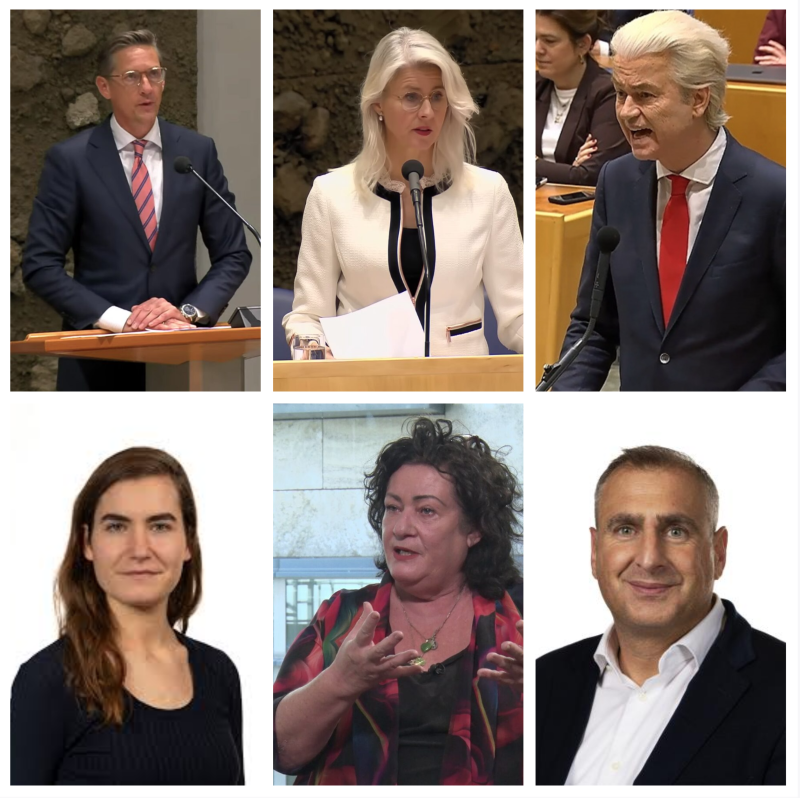
Due to their electoral defeat and in the following months, a power struggle unfolded within the party leadership. Popular former Deputy Prime Minister Mona Keijzer had been promised that she could take over the party’s leadership, but ultimately the party founders decided to reject this. They seemed to be afraid she wanted to reform the party and leave the core principles of their farming ideology. A conflict arose that Keijzer could not win: She left the party and started a solo operation in parliament.
Someone who only holds one of the 150 seats in the Tweede Kamer can still be very successful, as long as that person gets enough online and mainstream media attention. To succeed, Keijzer works around the clock to express herself and to promote her ideas. This unique politician, born and raised in Volendam, a well-known fishing village, often appeals to the gut feelings of Dutch people on the right. She intertwines her social conservatism with plain talk and common sense.
Unlike many right-wing competitors, Mona Keijzer can argue her positions strongly, making her a credible alternative for many right-leaning voters. She has been a rising star on Dutch television, where daily talk shows are very influential and reach large audiences. The question is whether she will join one of the other smaller right-wing parties or if she will found her own. Surveys show that she will attract voters from her former parties BBB and CDA (yes, Keijzer once used to be a member of the Christian Democrats), as well as PVV, VVD and JA21. Polls project five to ten seats for her in case of elections.
Will there be new elections soon? That’s difficult to tell. In seems that Prime Minister Jetten’s minority cabinet is working hard to achieve one or two big deals with opposition parties in order to govern substantially. By the opening of the new parliamentary year, in September by King Willem-Alexander, the coalition should have its act together and present a solution. If not, it will be very difficult to hold on in a country like the Netherlands, where most parties are almost always looking for new elections.
At this stage, predicting which star will rise in a new campaign is impossible, leaving voters with nothing but speculation.