The fall and rise of Japan
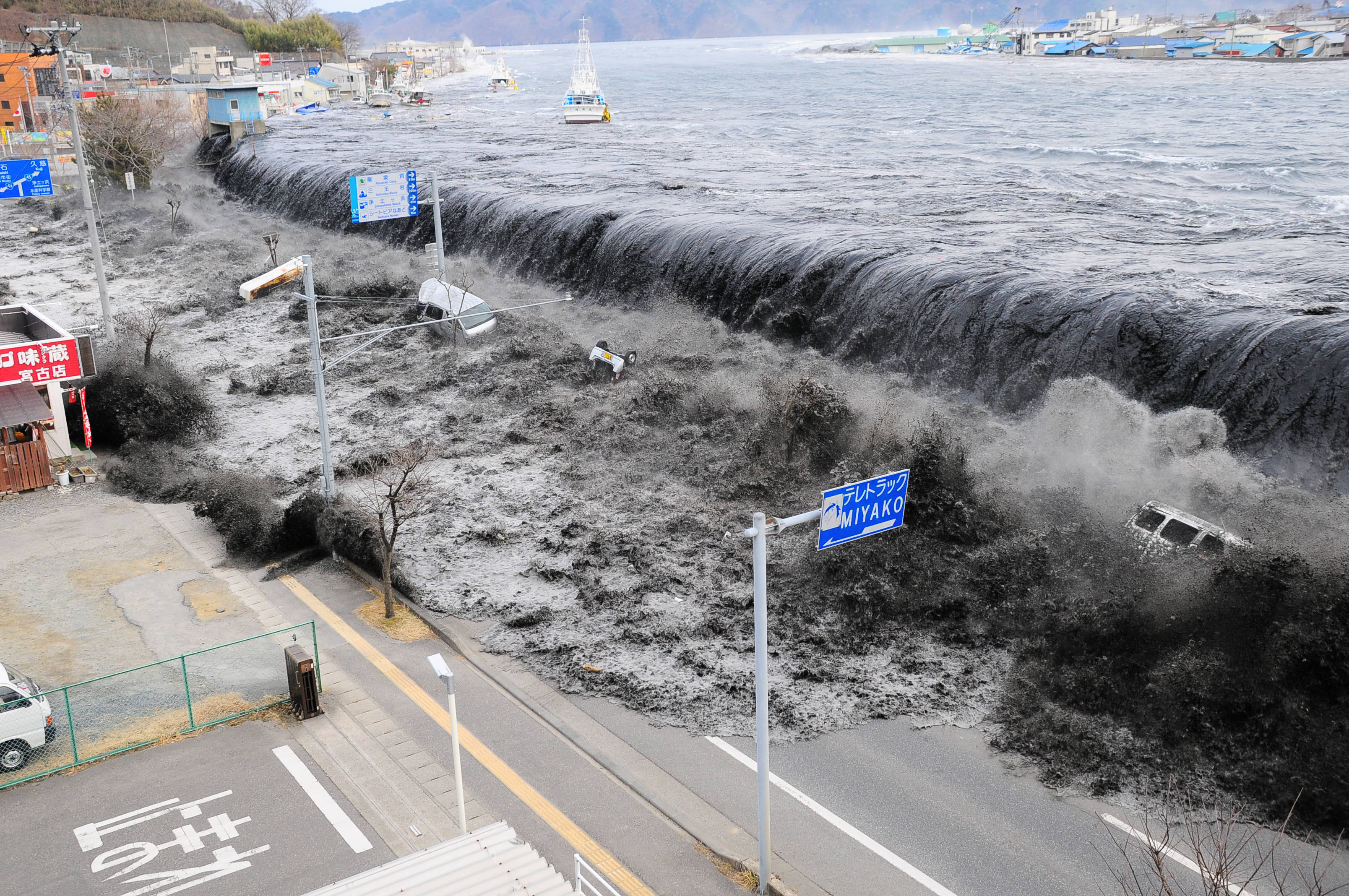
The upcoming Olympics mean a lot to Japan, a once sparkling economic superpower that has grappled with multiple crises in recent decades. Successfully hosting the event, against all odds and after billions of dollars of investments, would be a celebration of Japan’s steely resilience following the “Triple Disaster” (earthquake, tsunami and nuclear accident) that shook the nation a decade ago and, more recently, the raging COVID-19 pandemic.
In addition, as rival China is pouring massive resources into hosting the next Winter Olympics, the upcoming games in Japan mark the country’s return to the global stage. It is for this reason that the Yoshihide Suga administration has been determined to push ahead with the mega-event despite widespread domestic criticism.
The Northeast Asian country is no longer the formidable power it once was, coming just short of the world’s “number 1” half a century ago. Japan has lost its century-old status as the engine of industrialization in a now increasingly Sino-centric Asia. Plus, with rising new stars from South Korea to India, it is easy to dismiss Japan as a “has-been” power.
Upon closer examination, however, it is clear that Japan still remains a formidable force, boasting the world’s third largest economy and Asia’s most advanced naval forces. And unbeknownst to much of the world, the Asian country has gradually carved out a new role as the anchor of stability and prosperity in the region.
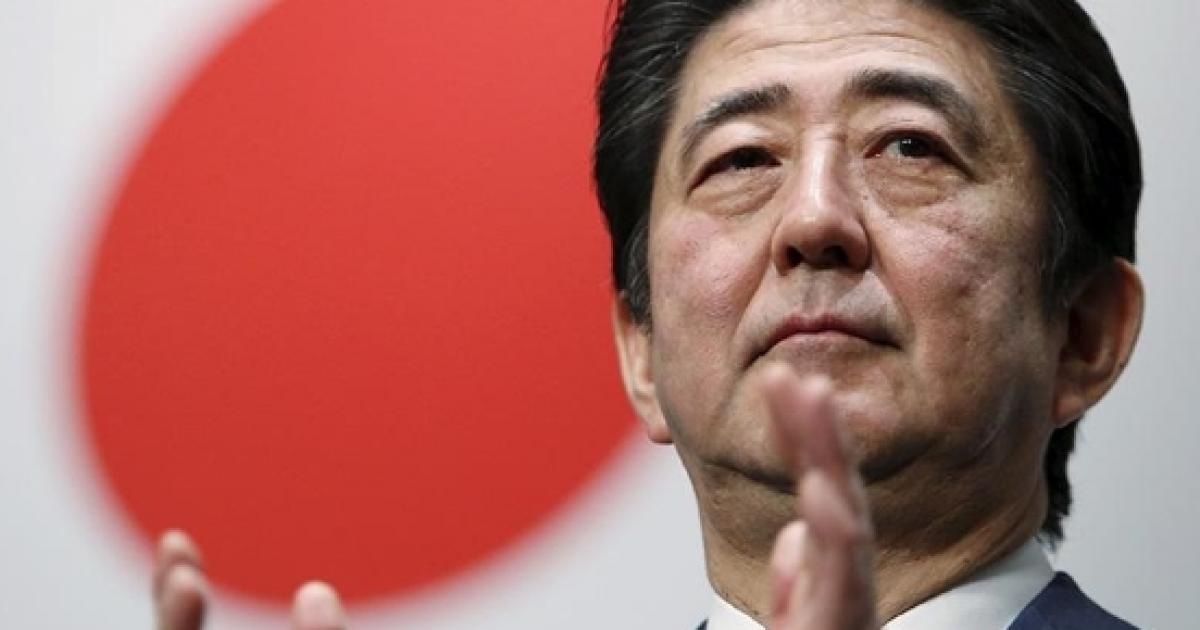
Former Prime Minister Shinzo Abe, the longest serving Japanese leader in modern history, played a central role in establishing the whole “Free and Open Indo-Pacific” (FOIP) vision. Over the past decade, Japan has steadily become the preeminent “middle power” shaping the future of the Indo-Pacific, the ultimate geographic pivot of 21st Century geopolitics.
The lost decades
Japan’s “Lost Decades” are arguably one of the most dramatic events in contemporary geopolitics. As recent as 1990, the country’s GDP represented 15% of total global economic output. Back then, Japan was responsible for almost half (45%) of the total trade volume in Asia and almost three-quarters (70%) of regional GDP. It was a picture of absolute economic dominance for Tokyo.
The asset bubble that burst in the late 1980s was soon followed by deflation and stubborn economic downturn that stretched decades. The 2008-2009 Great Recession proved a decisive year, as Japan’s share of global GDP dropped to the single digits, today standing at around only 4%. Economic decline would inevitably affect the country’s military prowess, which remained robust despite an avowedly pacifist post-war constitution.
At the beginning of the 21st Century, Japan’s defense budget was 60% larger than China’s. Just over a decade later, Japan’s historic rival boasted a defense budget that was almost three times larger. Today, China’s officially declared military budget ($252 billion) is larger than all of its immediate neighbors combined, dwarfing that of Japan ($49 billion) by huge margins. If one were to include China’s undeclared acquisitions and R&D spending, especially in purchasing power parity (PPP) terms rather than just nominal dollar counts, the Asian powerhouse’s edge over its neighbors would be even more pronounced.
It was precisely in recognition of this seismic shift in the regional and global balance of power that former Japanese prime minister Shinzo Abe launched a quiet revolution, which aimed to revamp his country’s domestic and foreign policy.
A scion of one Japan’s leading political families, Abe declared his determination to “build a new country” and promised to “take the lead in handing over a proud and hopeful Japan to younger generations.”
At home, he sought to revitalize Japan’s economy through “three arrows” of aggressive monetary, fiscal and corporate reforms, dubbed as “Abenomics”. Rather controversially, he also leveraged his parliamentary majority and personal popularity to relax constitutional restrictions on Japan’s defense policy and external projection of power.
Meanwhile, Abe, who visited dozens of nations throughout his long stint in power, presented Japan as a benign and trustworthy source of investments and technology. Under his watch, Japan resuscitated the Trans-Pacific Partnership trade agreement, which was repackaged as the Comprehensive and Progressive Agreement for Trans-Pacific Partnership after the Trump administration abandoned the deal.
He also oversaw the finalization of the world’s largest bilateral trade deal between Japan and the European Union. And to check China’s “debt trap diplomacy” under the Belt and Road Initiative, Abe launched a $110 billion infrastructure investment fund, which aims to provide transparent and high-quality investment options across Asia.
The pivot state
The former Japanese leader was also the undeclared chief architect of the whole “Indo-Pacific” paradigm, which would eventually be embraced by both the Trump and Biden administrations. As early as 2007, during his maiden speech before the Indian Parliament, Abe touted the “Confluence of the Two Seas” and spoke of a “broader Asia”, whereby Japan, India and other likeminded powers jointly preserve “seas of freedom and of prosperity” from the Indian Ocean to the Pacific Ocean.
During his second, and much longer stint, in power, Abe pushed the envelope by calling for an Asian “democratic Security Diamond,” namely the creation of a nimble and flexible coalition of likeminded democratic powers to uphold “peace, stability, and freedom of navigation” across the Indo-Pacific.
Thus, Japan has played a critical role in the revitalization of the Quadrilateral Security Dialogue, composed of Australia, India, Japan and the United States as the vortex of resistance against growing Chinese naval assertiveness across Asian waters and critical sea lines of communications, from the East and South China Seas to the Straits of Malacca and all the way to the Persian Gulf.
And more recently, Japan, under Abe’s protégé, Yoshihide Suga, has stepped up its defense policy vis-à-vis key European powers, including Germany, which have expanded their naval and diplomatic presence across the Indo-Pacific. Over the coming months and years, Japan, with an eye on China, is set to conduct increasingly regular naval exercises and high-level diplomatic talks with counterparts from Britain, France and Germany.
In effect, Abe helped turn Japan into the preeminent “middle power” in the region, or what the Italian philosopher Giovanni Botero described as a mezano power. For sure, the concept of a middle power has long been a subject of academic debate. In general, and especially in policy circles, the emerging consensus is that middle powers are nation-states, which have requisite strategic resources to withstand pressure from superpowers, as well as shape their immediate geopolitical environment.
Crucially, middle powers are relatively autonomous strategic actors, that are endowed with the capacity to project power internationally, facilitate coalition-building around specific international challenges, and boast a significant degree of soft power and credibility on the global stage.
If anything, Japan has been at the center of global initiatives to provide a constructive alternative to China’s Belt and Road Initiative, ranging from the $4.5 billion joint US-Japan high-tech infrastructure initiative to the Blue Dot Network (BDN) with the US and Australia, and the Build Back Better World (B3W) with fellow G7 powers.
In critical regions such as Southeast Asia, Japan is at the forefront of balancing China’s influence. Already the leading source of aid and foreign direct investments in the region, Japan’s new pledges ($367 billion) of big-ticket infrastructure projects are actually far larger than China’s ($255 billion). In frontline states such as the Philippines, Japan played a direct role, together with Australia and the US, in preventing state-owned Chinese companies from gobbling up critical infrastructure such as port facilities in Subic.
And far from just relying on “checkbook diplomacy”, Japan has also expanded defense spending at home as well as defense cooperation with and aid to regional states, from India to Vietnam, Malaysia and Indonesia. Across the region, Japan has been augmenting the coast guard and maritime security capabilities of South China Sea claimant states.
Most recently, Tokyo cleared the sale of advanced radar systems to the Philippines, which is exploring even more sophisticated defense acquisitions from Japan amid a new “golden age” of defense cooperation. Despite all its vicissitudes, the upcoming Olympics are a poignant reminder of Japan’s stealthy yet steady re-emergence as a pivotal player on the global stage.