The latest BRICS Summit: India’s test, China’s shadow, and Europe’s dilemma
India hosted the 18th BRICS summit on September 12 and 13, 2026. The group currently represents 11 member countries, accounting for roughly 49% of the world’s population and about 40% of the world’s GDP. Leaders from the non-Western Bloc, including among others Chinese President Xi Jinping, Russian President Vladimir Putin, Iran’s President Masoud Pezeshkian, Abu Dhabi’s Crown Prince Sheikh Khaled bin Mohamed bin Zayed Al Nahyan, and South African President Cyril Ramaphosa, met in New Delhi for their annual meeting to discuss about cooperation and share perspectives on matters of mutual importance. Inter alia, leaders talked about the escalation in West Asia, condemned unilateral tariff and non-tariff measures, and reiterated their support for a multipolar world order and for reforming the United Nations. Yet, if on the one hand these countries are driven together by a common interest in refusing a Western-led international order, on the other they also face their intra-group controversies, including histories of border disputes and even current military confrontations.
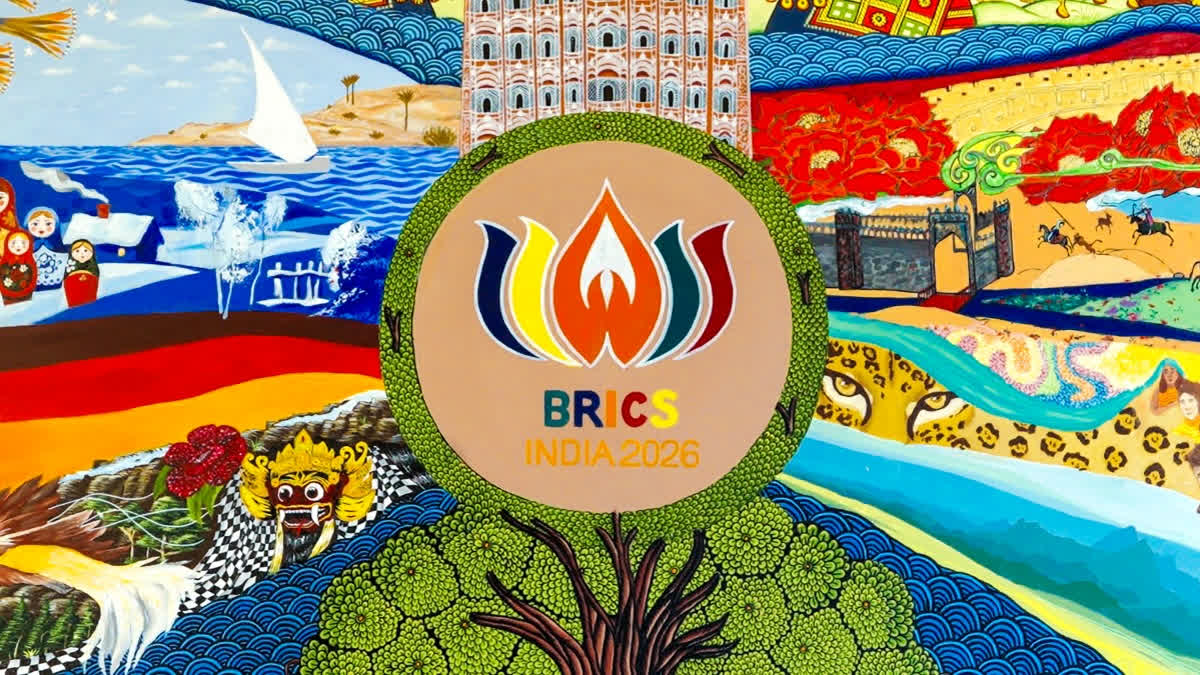
India as the Chair and the main outcomes of the Summit
BRICS is a very important platform to India, who seeks to be seen as a leader of the developing world, and yet refrains from taking a clear stance in critical situations that involve many of its Global South fellows. This year’s presidency was indeed a real test for New Delhi, as it needed to manage its relations with China; preserve Russia without inheriting its confrontation with the West; and accommodate Iran’s interests while deepening relations with the UAE, who had faced recent attacks from Tehran. The real test for India was thus to hold together such a diverse group, arguably more divided than it was some years ago.
Ultimately, the head of states converged on a series of matters. New Delhi hosted the summit under the official theme of “Building for Resilience, Innovation, Cooperation and Sustainability”, which sought to highlight its “Humanity First” approach. The 45 pages long joint declaration ranged from conflicts and terrorism to trade, development, energy, health, technology and global governance. It voiced “deep concern over the continued escalation of tensions” across the Middle East and West Asia,[1] calling for “maximum restraint” and warning against deliberate attacks on civilian infrastructure and on nuclear facilities, in particular. It further expressed concerns over the situation in the Gaza strip. The declaration also addressed the expansion of non-Western cross-border payment channels, cooperation on artificial intelligence and opposition to unilateral sanctions and tariffs. The question of currency and de-dollarization in particular was heavily debated ahead of the Summit; yet, India ensured the outcome document contained no explicit anti-Western language. As such, the declaration leaves room for flexible alternatives, but stops short of delivering any clear anti-Western policy overall.
Read also: What India wants: global influence and freedom of choice
For some aspects, the declaration was a diplomatic success, as it brought together the voices of states – such as Iran and UAE who are holding competing positions and facing confrontation elsewhere. What is relevant to note is not that differences disappeared, but that the members still managed to find a common stance, even if it required a carefully negotiated language. It might be fair to argue that this was a classic move of India’s diplomacy, and nowhere is that balancing act more visible than in New Delhi’s own relationship with China. However, beyond declarations, the practical impact of this balancing effort still remains open to debate.
Spotlight on India-China relations
China is one of India’s central BRICS dilemmas. The relationship between the two countries is marked by an unresolved border dispute which continues to be managed without a long-term resolution, amid a broader regional “cooperation while at competition” relationship. Extensive declarations were made by both sides at the Summit, towards reaching a mutual understanding and resolution of the border issue, as well as facilitation of economic ties and common market access. But behind these official statements, deep mistrust remains at the contested Himalayan frontier, together with an Indian trade deficit vis-à-vis China which has widened to $112.16 billion in 2025-26, and an enduring regional strategic rivalry. The 25th round of Special Representatives talks between India’s national security advisor Ajit Doval and China’s foreign minister Wang Yi was held in August 2026, followed by the first senior military “flag meeting” at Vacha and Damai in early September, which testifies that the dialogue between the two countries is active, but far from reaching a resolution of the existing dispute.
Beijing appears to be seeking a wider array of economic leverages vis-a-vis India; for some, the prospect of Chinese investments flowing into India would require New Delhi to shift its position that the state of the border will determine the state of overall ties. China thus expects India to downplay its immediate security worries, even as Beijing remains quietly driven by its own long-term security anxieties. Yet, India holds a different vision, and has maintained its bottom line regarding the state of the border’s effect on overall relations.
Read also: How India looks at China: dealing with uncertainty
Xi’s presence in New Delhi for the Summit, his first visit to India in seven years, signals that BRICS matters to China, and that its preferred approach is that both sides should handle their differences more discreetly and away from the public sphere. Indeed, the bilateral meeting between Indian PM Modi and Chinese President Xi was officially marked by a deliberate and controlled interaction. Yet, even if the dominant narrative since Modi’s 2025 visit to China for the Tianjin SCO summit has been of gradual normalization, New Delhi remains cautious about restoring full economic ties. Clearly, they both have strong reasons to seek a (more) positive relationship and avoid conflict, but it remains questionable how they are seeking to reach such an outcome.
Summit declarations alone are not enough when economic and military asymmetry persist and hinder strategic trust. Since the 2025 SCO summit that official warmth has held, but in the India-China bilateral relationship, coexistence between cooperation and unresolved sovereignty dispute is rather normal. In this sense, BRICS are an institutional tool to retain dialogue, but shall not be viewed as a proof they have settled what divides them.
India’s Balancing Act and Europe’s Dilemma
BRICS is no longer the five-member forum founded in 2009 to give the Global South a voice and seat at the table. With its current eleven members, expanded geographic reach, and a growing share of global GDP, it now carries real weight in shaping how the international order is contested. The September final declaration reiterates two main points overall: a frustration with the Western-led international order and the aspiration of the Global South. This is not enough to change the global strategic equation, but amid global fragmentation, countries with the diplomatic reach and trust to engage across opposing political blocs would become indispensable.
For Europe, the Summit is a reminder that this contestation is no longer an abstract concept. Despite significant differences in interests and perceptions among the BRICS members, they converge on shared positions on tariffs, sanctions, and flexible payment infrastructures that directly touch the European trade and financial ecosystem.
Read also: India and Europe: a window of convergence
The EU has long framed itself as a champion of a “rules-based order”; the BRICS display coherence and convergence on precisely those issues where that order is being tested, and this narrows the space for Europe to treat multipolarity as someone else’s concern. At the same time, the Summit’s internal fault lines and the different visions across members suggest that Europe should not treat the group as monolithic. India’s presidency shows a country trying to lead the Global South while avoiding entanglement or confrontation with the West.
This posture leaves room for a European engagement with India specifically. Delhi understands the constraints and priorities that exist across global divides, and is well placed to identify where compatibility is possible. In that sense, India’s global clout is still to be fully tested and consolidated, but its strategic value for Europe is undeniable.
[1]New Delhi Declaration, 2026 https://d2jiw2zrmmyqt8.cloudfront.net/wp-content/uploads/2026/09/12185124/New-Delhi-Declaration-2026-1.pdf