The war in Ukraine and the race for drone autonomy
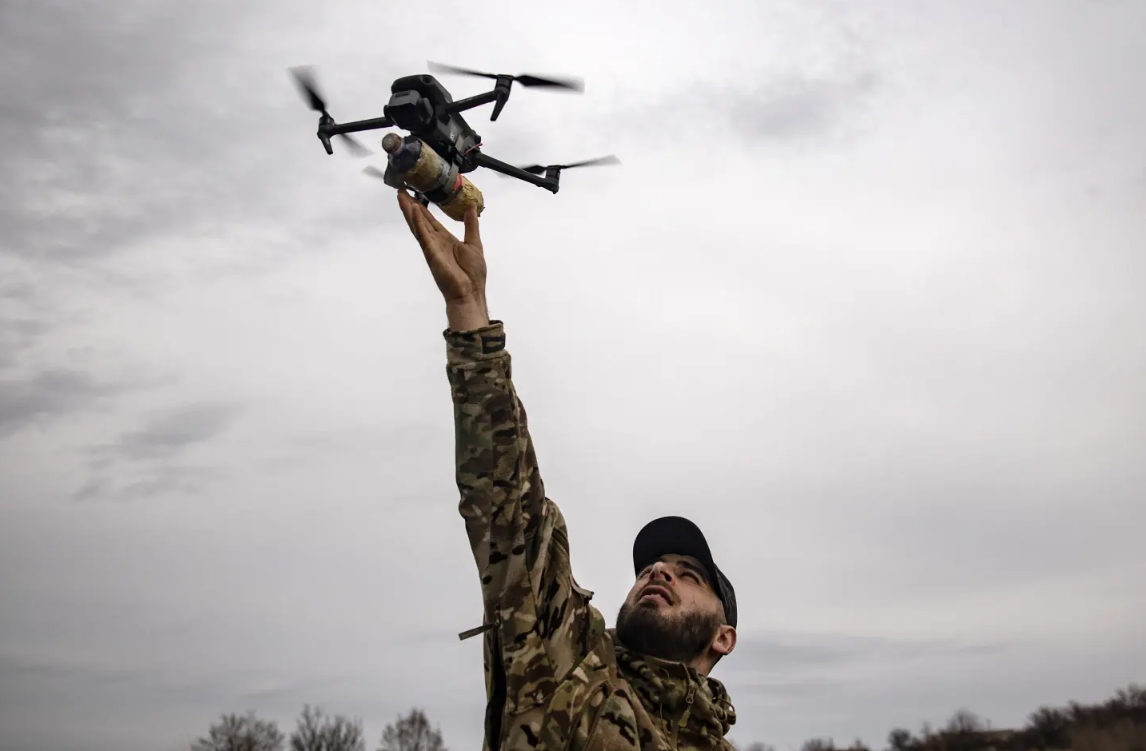
Since Russia’s full-scale invasion in February 2022, the conflict in Ukraine has witnessed a rapid expansion in the use of unmanned systems across the air, maritime and land domains. In particular, aerial drones have assumed an increasingly important role, contributing to the evolution of both air and ground operations. In the skies, the deployment of different types of unmanned aerial vehicles (UAVs), ranging from loitering munitions to one-way attack drones, has added new options for striking targets and, in some cases, enabled the saturation of enemy air defense systems. On land, the widespread use of UAVs has made the movement of ground forces more difficult on both sides by providing persistent surveillance and increasingly accessible fire support.
The growing reliance on UAVs, however, has also exposed both Ukrainian and Russian forces to a major vulnerability. Drones’ effectiveness depends on a stable communication link between the platform and its operator, making them particularly susceptible to electronic warfare. By 2023, both sides had established extensive jamming networks along the front, with estimates suggesting that 60-80% of Ukrainian first-person-view (FPV) drones failed to reach their intended targets. By early 2026, electronic warfare systems were also reportedly capable of disrupting or neutralizing nearly half of the Russian Geran series drones involved in nighttime strikes. These developments have increased the need to reduce reliance on vulnerable communication links.
Fiber-optic-controlled drones provide one solution, but a more radical and promising approach is to equip platforms with autonomous capabilities, using artificial intelligence to perform functions that would otherwise depend on a continuous connection with a human operator. The technological competition is, thus, no longer confined to the electromagnetic spectrum, but is increasingly extending into the realm of autonomy. Yet this competition is neither uniform nor linear. It follows different technological and operational trajectories, shaped by the availability of hardware, the type of neural networks, access to data, and the traditional cycle of measures and countermeasures.
Ukraine and Russia’s diverging paths to autonomy
At present, the application of AI on drones can be broadly divided into four main functions. First, terminal target guidance enables an operator to designate a target within a video feed, allowing the drone to autonomously continue towards the objective even if the control link is subsequently disrupted. Second, automated target recognition allows objects such as armored vehicles, logistics trucks and infantry units to be detected, identified and classified directly through the drone’s sensor feed. Third, visual terrain navigation enables unmanned systems to navigate autonomously without relying on global navigation satellite systems, mitigating the effects of enemy jamming aimed at disrupting the link between the drone and its operator. Finally, AI can support route planning and swarm coordination by optimizing flight paths and synchronizing the movements of multiple networked platforms, enabling coordinated swarm operations designed to saturate or overwhelm adversary defenses. When these functions are integrated within a single system, a drone can be considered fully autonomous, as it is capable of independently navigating, identifying and tracking targets, and conducting coordinated operations without continuous human control.
Despite the hype, no one has fielded true end-to-end edge autonomy. Ukraine has used narrower AI functions such as automatic target recognition and navigation assistance, while Russia has come closest with its V2U drone.
The most significant Ukrainian application of AI on drones has been its integration into mid-range strike systems like the “Hornets”, used to target Russian logistics and military infrastructure beyond the front line. This development has been driven in large part by the increasingly contested electromagnetic environment, where Russian electronic warfare can jam or spoof navigation systems at distances exceeding 50 kilometers from the front. To remain effective in these conditions, the drones rely on onboard neural networks and optical sensors that allow them to navigate by comparing real-time imagery with high-resolution satellite data stored in their memory. This enables the system to recognize its surroundings, determine its position and maintain its course when communication with the operator is disrupted. AI can also support the final stages of an attack, allowing the drone to recognize the designated target from its sensor feed and adjust its flight path accordingly. Finally, algorithms are used before launch to plan routes that take advantage of terrain and known gaps in Russian air defense coverage. Early evidence of all these capabilities emerged during Operation Spiderweb in June 2025, when Ukrainian drones reportedly continued along their pre-planned routes and activated their warheads after identifying their targets despite losing contact with their operators.
Despite these advances, the degree of autonomy currently achieved by Ukrainian systems remains limited. AI can allow a drone to continue its mission after losing communication with its operator, but it does not generally replace human decision-making, with operators still retaining substantial responsibility for target selection and mission oversight.
Read also: The unlearned lessons of war: Four years since the invasion of Ukraine
Russia, by contrast, appears to be pursuing a different path. After years of claims surrounding the autonomous capabilities of systems such as Lancet and Molniya, the V2U drone indicates a more concrete step towards full autonomy. Unlike the models intercepted in June and July 2025, which were equipped with LTE modems and therefore appeared to retain some reliance on operator connectivity, V2Us recently recovered lacked any external communication systems. Instead, the drone appears to rely on onboard sensors, including a laser altimeter and terrain-referenced flight profiles, to maintain low altitude and navigate without GPS. This represents a significant shift, since without a communication link there is no signal for electronic warfare systems to disrupt. The system’s autonomy also extends to target acquisition. Its onboard AI reportedly uses computer vision to search for and identify potential targets, allowing the drone to select an objective on visual characteristics such as shape, contrast and movement without relying on continuous human guidance. There have also been indications that V2U may be capable of operating in coordination with other drones, potentially pointing towards elements of swarm behavior, but this capability remains difficult to verify.
In general, the system development remains at an early stage and claims of full autonomy should be treated with caution given the limited evidence available on its actual performance in combat. V2Us seem far from infallible, with reports of algorithmic errors such as the misidentification of civilian objects as military targets.
Hardware, neural networks and the scaling problem
The divergence in the degree of autonomy achieved by Russian and Ukrainian drones was recently underscored by Serhii Beskrestnov, Advisor to the President of Ukraine and a specialist in radio technologies, who stated that Russia has surpassed Ukraine in the large-scale deployment of neural networks directly onboard unmanned systems. This advantage appears to stem from a combination of software choices and hardware advantages that have allowed Russia to pursue a more scalable approach to autonomous capabilities.
Rather than competing in the development of language AI models, where Russia lags behind Ukraine also due to sanctions and limited access to Western universities, Moscow has focused on adapting smaller and more specialized systems to specific battlefield tasks. Central to this approach has been the use of convolutional neural networks, which learn to identify and classify visual patterns by processing large numbers of images and extracting their constituent features. These systems, like the You Only Look Once (YOLO) architecture, can perform real-time object detection with considerably lower computational and memory requirements than language models, having direct implications for the hardware that can be installed onboard a drone and, ultimately, for the ability to scale production.
Ukraine currently has prototypes of such systems, but there are no UAVs that could be produced at scale. Lightweight platforms face significant constraints in terms of weight, power consumption and heat dissipation. Larger models require more powerful processors and batteries, generating additional heat and imposing further demands on space and payload capacity. By relying on relatively “light” models, Russian developers can use inexpensive, commercially available computing components, including NVIDIA Jetson Nano single-board computers that can reportedly be obtained on the secondary market for around $150.
The importance of hardware is also reflected in the increasing storage capacity observed in more recent V2U drones. Earlier versions reportedly carried 128 GB of storage, whereas newer examples have been equipped with drives ranging from 2 to 4 TB. According to Beskrestnov, this expansion may indicate a growing volume of both neural network models and the datasets used to train them.
The data dimension of the competition
Data used to train AI models add a third dimension of the competition for autonomy beyond hardware and software. Neural networks do not acquire useful capabilities in isolation. Their performance depends on the availability of large quantities of relevant training data, particularly real-world battlefield imagery capable of teaching algorithms how to recognize objects and patterns under operational conditions. In this sense, data has increasingly become a strategic resource in modern warfare, often described as the “new ammunition”. The competition over autonomous systems is therefore also a competition over who can collect, process and exploit battlefield data more effectively.
Training datasets must reflect the specific conditions in which an algorithm is expected to operate, since the battlefield can vary considerably across different sectors of the front. A model trained on imagery collected in one operational environment may perform poorly in another, where terrain, tactics and target behavior differ substantially. The type of drone also matters. High-altitude reconnaissance platforms observe targets from different distances and angles than low-flying FPV drones, meaning that the data collected by one system may not necessarily be suitable for training another.
Both Russia and Ukraine have recognized the importance of building dedicated infrastructures for training AI models. In 2023, Russia’s State Research Institute for Aviation Systems launched Platform GNS, a system designed to simplify the training of convolutional neural networks and made available to qualifying enterprises within the defense industrial base. The platform was complemented by an extensive dataset of battlefield and target imagery. Ukraine has pursued a similar strategy through initiatives such as Brave1 Dataroom and Avengers Labs, which provide defense companies with secure environments and annotated datasets based on real battlefield material to train AI models (Avengers Labs, for instance, is built around five million frames collected during military operations). Ukraine was also the first country in the world to open real battlefield data to international partners to support the development and training of AI systems by its allies.
Russia’s apparent advantage in onboard AI therefore does not necessarily result in a decisive advantage in autonomy. A fully autonomous system requires more than an algorithm capable of navigating or identifying a target. It also depends on access to a broader operational picture that allows autonomous platforms to understand their position within the battlefield. This is particularly relevant for more complex forms of coordination such as swarming, where individual drones must possess information about the location and activity of both friendly and hostile platforms.
Here, Ukraine appears to retain an important advantage through its battle management architecture. Systems such as DELTA integrate drones, sensors and firing platforms into a shared operational network, creating a broader picture of the battlefield and generating the data needed to support both military decision-making and AI development. Some elements of the DELTA ecosystem already use AI to detect, recognize and analyze objects automatically, and much of this data is used by Avengers Labs to train AI models applied on drones. Russia is attempting to develop comparable systems, but its more limited progress in advanced data processing and large language models may constrain its ability to build a similarly integrated architecture.
An enduring measure-countermeasure cycle
Finally, the last factor to consider in this competition for autonomy is the constant cycle of measure and countermeasure generated by the introduction of every new technology on the battlefield. The dependence of AI systems on training datasets can itself be exploited by exposing models to battlefield conditions that differ from those on which their algorithms were trained. This is particularly relevant for target recognition, as adversaries can deliberately alter the appearance or behavior of their equipment to deceive computer vision systems. Russian forces, for instance, have reportedly introduced complex camouflage patterns on military vehicles to confuse Ukrainian drones. Ukraine has responded by retraining its models with new imagery of equipment employing these patterns, illustrating also the importance of adapting algorithms based on battlefield conditions.
Read also: How Russia has learned to last in the Ukraine war
A second vulnerability concerns the performance of the sensors on which autonomous systems depend. These generate the raw data, including visual, thermal and positional information, that onboard processors transform into actionable information. Their effectiveness, however, can deteriorate significantly under adverse environmental conditions. Rain and fog can reduce the range and quality of optical detection, smoke can obscure visual references, and high winds can compromise the stability and positioning of lightweight platforms. These limitations can be deliberately exploited by an adversary. Russian forces have reportedly made use of poor weather conditions, including rain, fog and strong winds, to reduce their exposure to Ukrainian aerial surveillance and facilitate movement across otherwise exposed terrain. This means that the competition will also increasingly extend to the development and integration of more capable sensors, able to provide autonomous systems with more accurate and reliable information under complex battlefield conditions.
The physical environment itself provides further opportunities for concealment. Forests, rows of trees, fortifications and other forms of terrain can obstruct aerial observation and make target recognition more difficult, particularly in the cluttered conditions of ground warfare. In addition, passive measures such as drone nets and thermal concealment can reduce the visibility of personnel and equipment, while active defenses, including interceptor drones and missiles, can further restrict the time available for autonomous systems to detect and engage a target. The result is a continuous cycle in which every advance in autonomous capability creates new incentives for the development of countermeasures, which in turn drive further adaptation. As underlined by Sandor Fabian, “as drones become more autonomous, countermeasures will increasingly evolve to disrupt autonomy itself.”
In conclusion, in the race for drone autonomy, advanced neural networks and capable hardware will remain essential, but effective autonomous systems will also require software and data architectures capable of fusing and processing battlefield information, with their performance shaped by a continuous cycle of testing, learning and adaptation to evolving countermeasures.