
Qatar, Turkey, and the rebuilding of the Muslim Brotherhood
The Muslim Brotherhood has been an important transnational actor in Middle Eastern politics for about a century, and remains relevant to this day. Founded in Egypt in 1928 as Sunni organization, it now comprises national movements in over 70 Muslim and non-Muslim countries, as well as an International Union of Muslim Scholars (IUMS) based in Doha and Dublin. The IUMS consists of around 95,000 Muslim scholars and 67 Islamic organizations spread around the world, with Turkey and Qatar as their main state sponsors.
Following the 2013 Egyptian crackdown, the MB headquarters moved from Egypt to Cricklewood (London) where they publish the international outlet Ikhwan Press. The MB’s political leadership is plural, decentralised, and nation-based. It should not be seen as a unified organization, but rather as an informal coalition of like-minded parties and movements.
Consistent with its “Islamist” vision, the Ikhwan (Brothers) view Islam as the foundation of political order and hold a fundamental belief in political Islam – the notion that Islam should govern society and politics – opposing any form of Western colonialism and Israel.
Some of the groups that adhere to this loose organization are rightly considered more dangerous and prone to terrorism and violent political activism than others. This explains, for example, why President Trump’s executive order in November 2025 prompted US officials to investigate whether MB branches in Egypt, Jordan, and Lebanon – but not, for example, in Morocco, where MB participated in the government for over ten years (2011-2021) – meet the criteria for designation as Foreign Terrorist Organizations (FTOs). Interestingly, the US is not holding politically accountable in any significant way the two states (Turkey and Qatar) closely associated with the Brotherhood and actively supporting at least some of its operations.
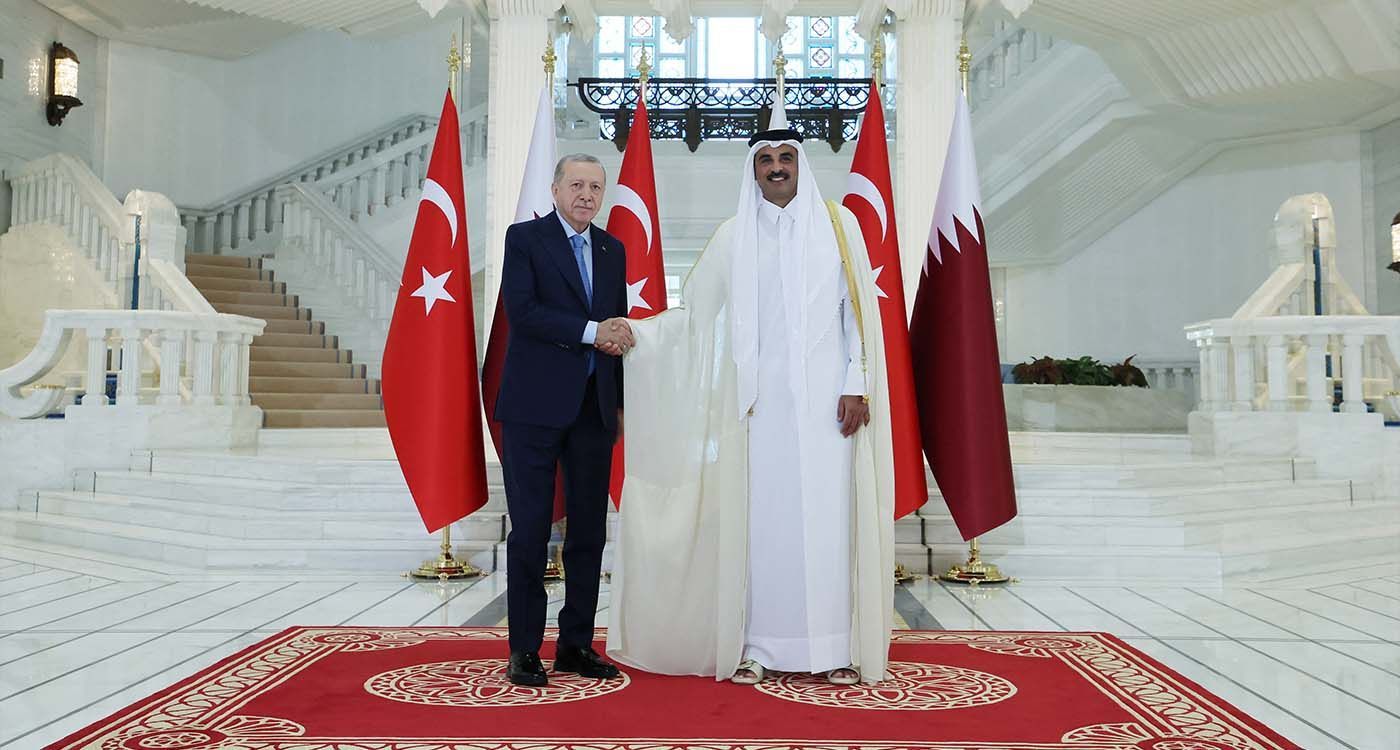
The MB pillar in Turkey’s changing foreign policy
While other Sunni countries, most notably Egypt, the UAE and Saudi Arabia, have banned the Brotherood altogether, Turkey and Qatar have been pursuing a very different path. For more than two decades, both countries have cultivated, sometimes quietly and sometimes openly, direct tied with the Ikhwan.
Turkey has pursued wider ambitions. It has welcomed senior Hamas leaders to settle in Turkey and run real estate and other businesses, whose revenues will be used to raise funds for the movement.
Erdoğan thus embarked upon a new multilayered and multipronged region-building process, intervening simultaneously in Libya, Syria, and Somalia while pushing the “Blue Homeland” project in the Mediterranean Sea. In Libya, Turkey’s 2020 incursion in support to the UN-recognised Government of National Accord (GNA) in Tripoli against Khalifa Haftar’s Libyan National Army (LNA) was aimed at securing the November 2019 maritime memorandum signed with the GNA, assigning exclusive economic zones (EEZs) and offshore gas fields to Turkey at the expense of other Mediterranean states such as Greece, Cyprus, and Egypt. The fact that the GNA Presidential Council included diverse figures leaning on “Libya Dawn” – a coalition of militias with MB ties – provided more of an ideological cover than a reason to explain Türkiye’s military intervention in Libya.
And not only there: for instance, in 2017, Turkey signed a 99-year agreement with the government of Sudan under Omar al-Bashir to restore and develop Suakin Island, a historic Ottoman-era Red Sea port facing Jeddah, into a tourism and cultural hub for Hajj pilgrims. The Bashir regime’s close ties with the MB were therefore instrumental in the AKP’s plans to advance its pawns in the Horn of Africa. Yet the deal was based on the pragmatic interests of both parties, particularly Ankara’s desire to establish a military base in the Red Sea.
The same goes for Somalia, on which Turkey has set its sights since 2017 opening Camp TURKSOM, a military base training over 15,000 Somali troops to combat al-Shabaab. Moreover, Ankara delivers a large quantity of weapons to the country – including helicopters, support aircraft, infantry weapons, armoured vehicles, and night-vision gear – and has secured lucrative business deals, including control over fisheries, ports and airports, infrastructure projects, and maritime defense pacts, gradually establishing itself as Mogadishu’s dominant external partner in the Horn of Africa. Therefore, it comes as no surprise that President Erdoğan prioritizes Somalia’s “unity and territorial integrity,” opposing Israel’s recognition of Somaliland in 2025.
Read also: Moscow, Tehran, Ankara: Syria’s new dawn or another storm?
The collapse of the Syrian regime on December 7, 2024, was undoubtedly the crowning achievement of Turkey’s foreign policy. This victory was made possible by the yearlong military and political support Turkey provided to Hay’at Tahrir al-Sham (HTS) and the Syrian National Army (SNA). With Turkish airpower, artillery, and logistics backing them, these former jihadi groups immediately brought down the Assad regime, which had ruled for fifty-three years. The Islamist victory in Syria yielded three key achievements for Turkey: containing the Kurds in the north and maintaining control of the established buffer zone; renewing trade ties and construction bids in the neighbouring country, which includes helping Syria recover and convincing the U.S. and Europe to lift sanctions ; and, additionally, a new channel of influence in the Sunni world. This proved particularly useful as a diplomatic bargaining chip in mending ties with the GCC and Saudi Arabia after the 2017 rift with the MB axis. Trump also recognized Turkey’s pivotal role in stabilizing Syria: in January 2026, he dispatched Thomas Barrack as the U.S. ambassador to Turkey and special envoy for Syria, thus explicitly recognizing the connection between the two issues.
The Qatari strategy
Doha has largely adopted the Muslim Brotherhood’s policy approach in the region, disseminating its ideas through the popular Al Jazeera network, made available as an international platform for renowned Brotherhood thinkers such as Youssef al-Qaradawi. This deal has allowed a relatively small country like Qatar to project its soft power beyond its limited geopolitical influence.
The country did not have a significant independent foreign policy until the 1990s. However, it shifted dramatically under the rule of Sheikh Hamad bin Khalifa Al Thani in 1995. Qatar transitioned from GCC-aligned positions to an independent “soft power” strategy, leveraging media outlets like al Jazeera and diplomacy. It was also able to build its fortune on mediation and diplomacy, and succeeded in doing so precisely because it (beside posing no serious strategic threat to its neighbors) it maintains open lines of communication even with groups considered extreme, terrorist, or subject to international sanctions.
Thanks to its risk-taking ability and multilayered diplomacy, Qatar brokered the 2008 Doha Agreement, which ended political violence in Lebanon. It also mediated in Libya in 2015 and played a key role in the U.S.-Taliban Doha Agreement in 2020, as well as in successive Afghan intra-talks. Additionally, Qatar served the interests of the U.S. by participating in indirect talks for the U.S.-Iran nuclear deal in 2022, thus building a solid reputation as a peace-broker. Finally, in 2023, the Qatari-Turkish alliance was actively involved in addressing the food insecurity consequences of the Russian-Ukrainian conflict.
Qatar then opted for a middle ground in the Gulf controversies by maintaining good relations with both the GCC and Iran. With the latter, Doha jointly manages the world’s largest gas field, the North Field/South Pars, which has turned energy coordination into a major pillar of their bilateral relationship. However, the protection offered to MB member caused a rift between 2017 and 2021 when Saudi Arabia, the UAE, Bahrain, and Egypt designated the Ikhwan as a terrorist organization and consequently severed ties with Qatar, imposed a blockade on it, and closed shared borders and airspace in response to its refusal to do the same.
Read also: Assessing the effects and prospects of the 2020 Abraham Accords
Since 2021, both Qatar and Turkey have been trying to mend their ties with the GCC: they backed Saudi initiative in Yemen, indirectly supporting the Ikhwan-affiliated al-Islah Party in Yemen despite its open hostility to the MB on its soil, they exchanged high-level visits and normalized relations with Riyadh and Abu Dhabi and resumed trade and flights as usual. In the meantime, they both focused on strengthening their own independent network of MB allies in Libya, Somalia and al -Sharaa’s Syria, to fund reconstruction and provide energy to deter both the separatist Kurdish and Iranian threats and allow the refugees to return.
The Gaza and Iran challenges
Since 2021, Ankara and Doha have engaged in a cautious balancing act, aware that the balance of power was tilting in favor of their Sunni and regional rivals (Israel) due to the Abraham Accords and the US’s staunch support of the GCC. As they did not want to further alienate their Sunni rivals, they quietly reestablished channels of communication with all parties without toning down their anti-Israel rhetoric: for example, Turkey welcomed Israeli President Isaac Herzog’s official visit in March 2022, and Doha brokered multiple truces in Gaza, including the October 2025 ceasefire under Trump’s 20-point plan.
Both Turkey and Qatar are increasingly being targeted as enemies by Jerusalem, which remains highly critical of the Muslim Brotherhood’s influence in the region, particularly due to its widespread grassroots support among Muslims in the region. If these efforts were not sufficient to secure a seat on Trump’s Gaza Board of peace due to strenuous opposition of Jerusalem, highly suspicious of the MB popular influence in the region, were nevertheless useful in restoring relations with Riyadh, which had previously deteriorated.
However, this renewed regional cooperation will be put to the test in Syria. Although Islamists and the Muslim Brotherhood control the country, it is a pivotal location for GCC countries that want a say in the reconstruction process. The challenge will be how reconstruction tasks are shared, particularly with Saudi Arabia, which is eager to play a leading role. Al-Shaara and the Syrians have made it clear that the country is ready to welcome all foreign investment to rebuild its economy. Currently, Qatar and Saudi Arabia are working together to finance Syria’s public sector and settle its $15 million debt with the World Bank. Meanwhile, Turkey is lobbying to join a defence pact between Saudi Arabia and nuclear-armed Pakistan, which could eventually create a new military bloc in the Middle East.
Read also: Saudi Arabia and the US: Aligned on Syria amid uncertainty on Gaza and Iran
Turkey and Saudi Arabia also support the same side in Sudan’s civil war, which pits the Sudanese army against the paramilitary Rapid Support Forces (RSF), backed by the UAE. Thus, there are growing signs that the MB axis is cooperating closely with Saudi Arabia, which blurs previous divisions into opposing blocs. However, it is unlikely that Doha and Ankara will join the Saudi-led Islamic Military Counter Terrorism Coalition (IMCTC) and abandon their network of regional and international partners and allies, especially after achieving the significant result of returning Syria to the Sunni camp.
The MB axis could lose the Gaza reconstruction challenge, but they cannot be sidelined in the region, even after the apparent demise of the Arab Spring in 2011. While this may not automatically mark a turning point for Hamas, it certainly signals that the Muslim Brotherhood (MB) and its ideas continue to circulate in the Middle East and remain an unavoidable challenge in the region. In fact, as the MB’s strategic aim of rallying the masses to build an Islamic state continues to be a legitimate concern for many countries inside and outside the region, their progressive tactics, their pro-democracy stances, the popular support they enjoyed, and the ability to mediate between the West and its enemies make them essential partners for building a politically representative dialogue in the region.
This does not mean that the MB and the countries that protect them cannot be pinned down on their contradictions – see the ambiguous position taken by Turkey and Qatar in the face of recent street demonstrations in Iran – but that reducing them to political and diplomatic clandestinity is not the right way to do so.