Assessing the effects and prospects of the 2020 Abraham Accords
On September 15, 2020, with the strong backing of the first Trump administration, the Abraham Accords were signed by Israel and two Gulf countries (the United Arab Emirates and Bahrain) followed shortly by Morocco and Sudan. Although the big prize – still missing as of today – was direct participation of Saudi Arabia, they were heralded as a major diplomatic achievement for the US and as a regional breakthrough as they proposed a new model of coexistence based on religious tolerance and fighting extremism to ensure regional stability, cooperation and prosperity for all. The accords aimed to fully integrate Israel into the Middle Eastern region, breaking its decade-long mental and political siege.
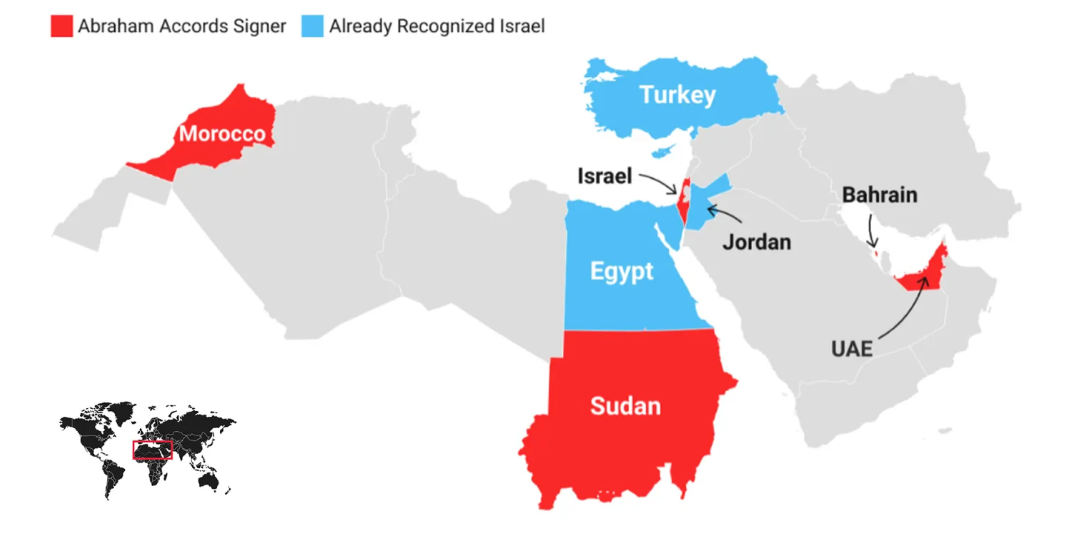
The “Declaration” that sets the basic principles states that the signatories “recognize the importance of maintaining and strengthening peace in the Middle East and around the world based on mutual understanding and coexistence, as well as respect for human dignity and freedom, including religious freedom”.
They promised to promote trade and technological cooperation that would benefit all countries, as well as to address security concerns related to Iran, and they delivered on both goals. The trade balance has indeed benefited almost all partners: The United Arab Emirates has recorded a significant trade surplus since 2021, it signed a free trade agreement with Israel in March 2023, purchased a substantial stake in the Tamar gas fields (22%) and stocks of F-35 jets. Furthermore, it established a $3 billion fund for investment and job creation, and signed significant contracts with prominent Israeli defense companies and startups, including Israeli Aerospace Industries and Elbit Systems, to acquire anti-drone systems and unmanned aerial vehicles. Bahrain, for its part, signed 12 agreements on water management, digitalization, aviation, and technology exchanges. In addition, in 2023, it finalized the so-called Fintech Agreement, which gave it full access to Israeli consumer and bank data.
The Abraham Accords have been indeed a success story, relying on the nearly perfect complementarity of the Israeli and Gulf economies. The Accords provided the two Gulf countries (Bahrain and the UAE), which needed to develop their military and technological sectors but lacked the necessary skills and manpower, with Israeli high-tech skills and military know-how and secured lucrative contracts for Israel’s military industry in a booming regional market. Furthermore, they presented themselves as a starting point for resetting the region, with the final goal of incorporating the Middle East into the global infrastructure of the India-Middle East-Europe Economic Corridor (IMEC) by building a new railway network connecting Damman, Saudi Arabia, to Haifa.
The Abraham Accords also hinted at the beginning of cultural cooperation between the Jewish state and the Arab world. For example, an exhibition on the Holocaust was hosted in Dubai, and the study of the Jews’ extermination in Europe was introduced in public history books in UAE schools. Additionally, a chief rabbi was appointed in the UAE to mark the official establishment of the Jewish faith. Finally, the Sa’adiyat Island hosted the first “Abrahamic Family House”, a major religious complex featuring a mosque, church, and synagogue as houses of worship for their respective faiths, advocating interfaith dialogue and understanding.
Instead, the agreements reached with Israel gained Morocco Western recognition of its sovereignty over Western Sahara, conducted joint military drills with the IDF, mutually removed tourist visa requirements, and acquired advanced military technology, including Barak MX air and missile defense systems. Sudan gained the removal of its name from the EU/US rogue states list and related sanctions. However, it could not exploit this opportunity strategically to reestablish itself in the international community as a new civil war broke out immediately afterwards (April 2023).
The Biden administration did not recoil from the agreements, despite their being counted among the successes of the former Republican presidency. To the contrary, during his tenure (2021-2025), President Biden made several attempts to enlarge the scope of the agreement to include Saudi Arabia with military and nuclear guarantees to Riyadh. He went so far as to offer US military defense guarantees, advanced weapons and support to establish a civil nuclear program aimed at building 17 reactors. Indeed, the Biden administration has acknowledged the potentially transformative impact of the Abraham Accords, as well as their possible effectiveness in containing Iran and distancing China, by sponsoring the creation of a regional, integrated technological market that is self-sustaining in production and trade.
Even countries that did not officially join the agreements, such as Egypt and Jordan, viewed normalization favorably, although they decided to keep a low profile about their cooperation with Israel. They did not take center stage, knowing that public opinion strongly opposed improving relations with Tel Aviv (88% of Egyptians and 70% of Jordanians rejected this already in 2022) and were also aware of the presence of radical Islamist strongholds in both countries that would likely undermine any official cooperation beyond the economy. Yet, already in 2018, Egypt landed lucrative contracts with Israel, including the al-Arish-Ashkelon pipeline and the construction of a major LNG installation in Damietta. Additionally, the Egyptian company Dolphinus Holdings signed profitable gas export contracts with Israel’s Delek Group Ltd. and Texas-based Noble Energy Inc., partners in the Leviathan field, setting to export 85 billion cubic meters of gas over 15 years. In late August 2025, amid the Gaza war, it signed a new $35 billion contract to import additional gas from Israel starting in 2026 and ending in 2040. Even Jordan has a contract in place since 2015 to exploit the Leviathan gas field, which provides approximately 40% of Jordan’s energy consumption. Beyond the economic gains from trade with Israel, both countries participated in the Negev Summit in March 2022, the first informal regional coordination group aimed at enhancing diplomatic relations, tourism, direct flights, and arms cooperation in the region. Finally, in 2022, Lebanon backed off from its confrontational position and entered negotiations to exploit its offshore gas fields, signing a maritime border agreement with Israel in October under US guarantees, which finally outlined the respective exclusive economic zones.
Read also:
The missing actor in the Middle East’s regional war: the Arab States
The Gulf States’ regional role after October 7th
I palestinesi e il progetto geopolitico che lega Israele ai Paesi arabi
Despite the significant achievements of the Abraham Accords, they were built on shaky ground by pushing for normalization between Israel and Arab countries without a clear path to Palestinian statehood. This arrangement was openly rejected by regional groups and states belonging to the Iran-led Axis of Resistance, as well as states close to or led by the Muslim Brotherhood, such as Qatar and Turkey, but also by the Palestinians themselves, that is, both by the Palestinian Liberation Organization (PLO) and the Palestinian Authority (PA). This void was blatantly highlighted by the October 7th attack, ordered by Yahya Sinwar, the head of the Hamas military wing, whose self-declared goal was to bring the Palestinian national question back into the spotlight of international attention.
In fact, Palestinians have been sidelined since 2020 and have witnessed a substantial worsening of their living conditions due to a constant increase in the number of settlers and the expansion of housing projects in the West Bank. On May 29, 2024, the Occupied Palestinian Territories administration was transferred from military to civilian authorities, paving the way for the future annexation of the West Bank or the Jordan Valley. Since the last Netanyahu government came to power in December 2022, displaying the most right-wing coalition in Israel’s history, there has been an uptick in violence by settlers, and religious provocations on the Temple Mount by Minister Ben Gvir have not helped defuse tensions. In addition, the Gaza war, with its enormous death toll, as well as the Israeli military’s grip on the Strip — disregarding any political horizon and rejecting any Arab or international diplomatic move — has brought the Abraham Accords to a standstill. While it did not mark a total breach, as the UAE did not waver, Bahrain recalled its ambassador in 2024, signaling a diplomatic setback and Morocco experienced spontaneous mass demonstrations in April 2025. So far, though, only Turkey, not a signatory to the Abraham Accords, has completely severed all ties with Israel (as of September 2025).
The situation in Gaza, in addition to the Israeli government’s continuous threats to annex partially or totally the West Bank, brought to a halt the transformative power of the Abraham Accords. It reinstated long-standing barriers and animosity between Muslims and Jews, as the IDF was blamed for acting with religious and ethnic fury towards the Gazan civilian population. Moreover, Israel’s creeping takeover of the West Bank, its military invasion of Lebanon, and its continuous attacks on Syria and Yemen further inflamed Arab public opinion, delivering the final blow to normalization. According to the latest Arab Barometer (June 23, 2025), only 13% of Moroccans, 12% of Lebanese, and 3% of Jordanians approve of normalization with Israel, reflecting a significant decline in support. Although the free expression of Arab public opinion is highly constrained, Arab governments are refraining at this time from taking any visible conciliatory steps toward Israel, given its disregard for international law and commitments.
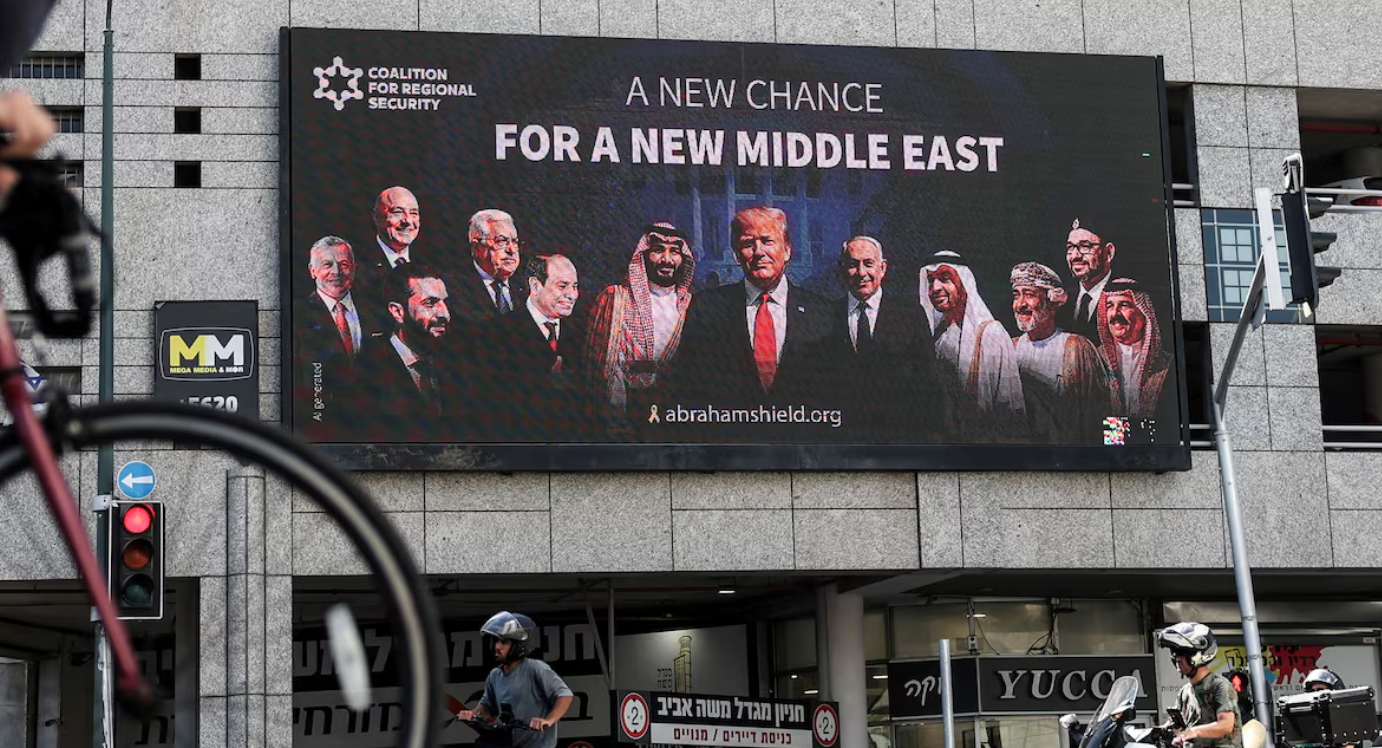
Paradoxically, however, Israel still appears less isolated in the Muslim and Middle Eastern governments than in the West, where the battle over Rafah and operation “Gideon’s Chariots” marked a watershed in public opinion. In the Middle East and in the wider Muslim world some governments, like the UAE, emphasize the growing divide between the Israeli government and its people. Other countries, such as Azerbaijan, Kazakhstan and Syria, seem eager to sacrifice Gaza and Palestine to normalize relations with Israel and gain diplomatic achievements from the US, such as the removal of sanctions against Syria or securing military agreements. Somaliland and Puntland, two small splinter states of Somalia in the Horn of Africa, even signaled their intention to take in Gaza refugees in exchange for recognition as independent states and US economic benefits. As former Israeli diplomat Aliza Bin Noun rightly points out, many unofficial relations continue under the radar, as Israel has a major interest in maintaining its qualitative military edge and weapons trade ties with the Gulf to turn it away from China’s technological advances. Meanwhile, Egypt acted undisturbed by Israel’s rejection of the Arab plan for Gaza. The new Lebanese government, led by Prime Minister Nawaf Salam, has also expressed a desire to have good relations with Israel by supporting the state monopoly on weapons and curbing Hezbollah’s military wing, despite the ongoing campaign in Gaza. Oddly enough, in July 2025, five Hebron sheiks penned a letter to the Ministry of Economy Nir Barkat, asking to join the Abraham Accords as Palestinian local authorities, despite or notwithstanding the Palestinian Authority’s full rejection of the latter. Similarly, some Gulf countries quietly appreciated, though not officially, Israel’s recent military standoff with Iran in July, which brought Tehran back to its senses and postponed its nuclear threat. Behind the scenes, Saudi Arabia views as positive a Middle Eastern region where both the Muslim Brotherhood and the Axis of Resistance have lost ground. In fact, the realization of Mohammed bin Salman’s ambitious 2030 Vision depends on a pacified Middle East that would have transitioned from a land of bloodshed and war to an internationally renowned entertainment, travel and business destination.
The Arab people could take to the streets in outrage over the bloodshed and famine of the Palestinians, but their governments remained unconcerned and signaled their intention to continue doing business with Israel as usual. Yet, this time it is Israel that is not playing along, acting as an outlier: In fact, some of its current right-wing government’s postures and declarations could severely damage the Abraham Accords. For example, Finance Minister Bezalel Smotrich’s obsession with annexing the West Bank and his recent proposal to incorporate 82% of it could heavily upset the regional balance. The real problem is that his views are widely echoed throughout the government and the Likud—the Prime Minister’s majority party and supposed “pragmatist” wing. Energy and Infrastructure Minister Eli Cohen has indeed played normalization versus the annexation, declaring himself “willing to forgo peace with Saudi Arabia, to forgo normalization — as sovereignty (over the West Bank) comes first. We made peace with Morocco, the UAE, and Bahrain without a Palestinian state. We were supposed to advance peace with Saudi Arabia in early 2024, also without a Palestinian state. But if we must choose, sovereignty comes first.” (Special committee at the Knesset aimed at advancing sovereignty over Judea and Samaria, July 21, 2025).
Similarly, Israel’s unhinged military attacks on neighboring countries are worrying the Gulf countries, which value territorial independence and national sovereignty. One of their spelt-out red lines is indeed forced displacement of Palestinians from the West Bank to Jordan and possibly Egypt and even the Gulf countries. So, it comes as no surprise that the UAE Ambassador to the US, Nusseibeh, has sent an alarming message to the Trump administration that has not gone unnoticed. In fact, she denounced the annexation of the West Bank as an even more critical issue for the Arab countries than the complete erasure of Gaza. The former would not only mean the end of the Palestinian question, but it would also create new refugee flows destabilizing all regional countries.
Read also: Tel Aviv, Tehran, Washington, and the failure of multilateralism
The potential refugee issue is considered a ticking bomb, and this is why the West Bank is judged as the most sensitive issue in the region. For Netanyahu, exchanging an end to the Gaza war for West Bank annexation — a move that could garner him political support within the country — could be politically expedient at home but costly internationally. Perhaps the UAE ambassador’s remarks did not fall on deaf ears neither in Washington, where President Trump immediately proposed an immediate end to the war, nor in Israel, where Netanyahu backtracked on his musings on West Bank annexation, after having officially aired plans for territorial expansion in his i24 interview on August 12th, prompting swift condemnation from all Arab states (Saudi Arabia, Qatar, Jordan, Egypt, the Arab League, and the PA).
The Abraham Accords have indeed survived the two-year-long Gaza war, but not the indefinite Israeli appeal for colonial-inspired border adjustments and land acquisitions of the current Israeli Revisionist Government in an already unstable region like the Middle East. In their desperate quest for normalization at any price, the signatories of this diplomatic framework wished to put all wars behind them and focus on development and prosperity: a paramount objective that Netanyahu’s Greater Israel’s greed is now about to undermine.