Albania and Serbia: civic activism and the idea of European integration
Albania and Serbia continue to experience significant waves of protest that share striking structural patterns, despite emerging in distinct domestic contexts. Both cases highlight the decisive role the European Union can play, particularly in applying leverage to ensure adherence to the rule of law. As EU candidate countries, both are supposed to be bound to align their national legislation with the EU acquis, including environmental standards, public participation mandates, and democratic governance benchmarks.
Stabilitocracy
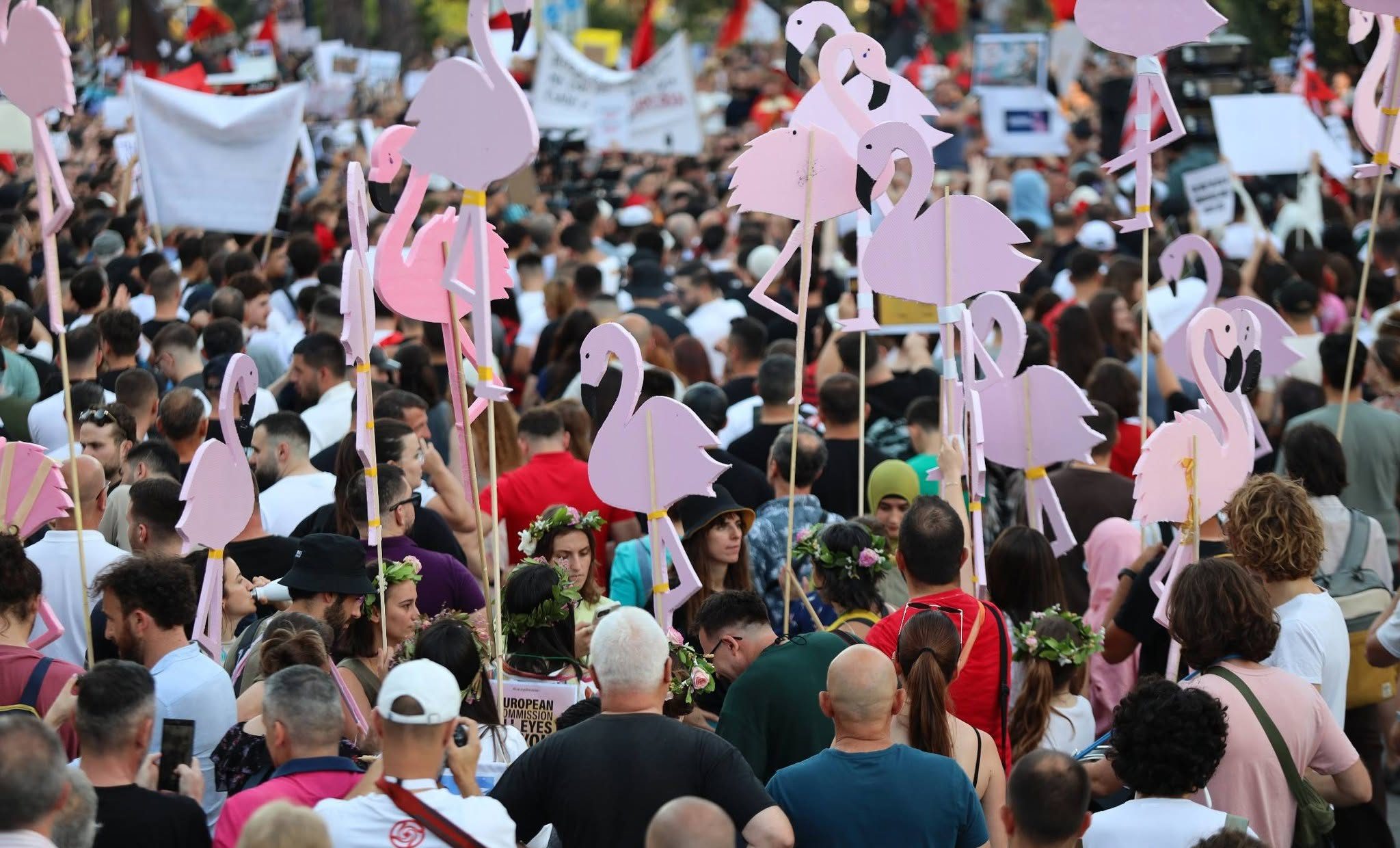
However, despite formal EU conditionality, Brussels institutions have frequently faced criticism for nurturing “stabilitocracies” in the Western Balkans – hybrid regimes in which democratic regressions and institutional shortcomings are tolerated for the sake of geopolitical stability. Current developments in Albania exemplify this dynamic. Prime Minister Edi Rama has remained in power since 2013 across four consecutive mandates, gaining the majority of seats with the center-left Socialist Party of Albania and being elected as Prime Minister with 82 out of 140 seats as the only candidate. His administration was recently challenged by the so-called “Flamingo Revolution”, an enduring wave of civic demonstrations.
The catalyst for what has grown into one of the largest protest movements in Albania since the fall of communism was a luxury tourism development proposed by Jared Kushner, the son-in-law of U.S. President Donald Trump. The initiative envisions high-end resort complexes within the protected ecosystems of the Vjosa-Narta Delta and Sazan Island. Demonstrators have particularly targeted the government’s direct accommodation of the investment through targeted legal revisions. The Albanian Parliament enacted Law No. 21/2024, which was fiercely opposed by environmental groups for diluting the legal safeguards of protected areas. This rollback coincided with the strategic framework established under Law No. 55/2015 on strategic investments, which facilitates expedited administrative paths for high-capital foreign ventures. Together, these measures have prompted grave concerns regarding legislative transparency, regulatory integrity, and compliance with EU environmental benchmarks.
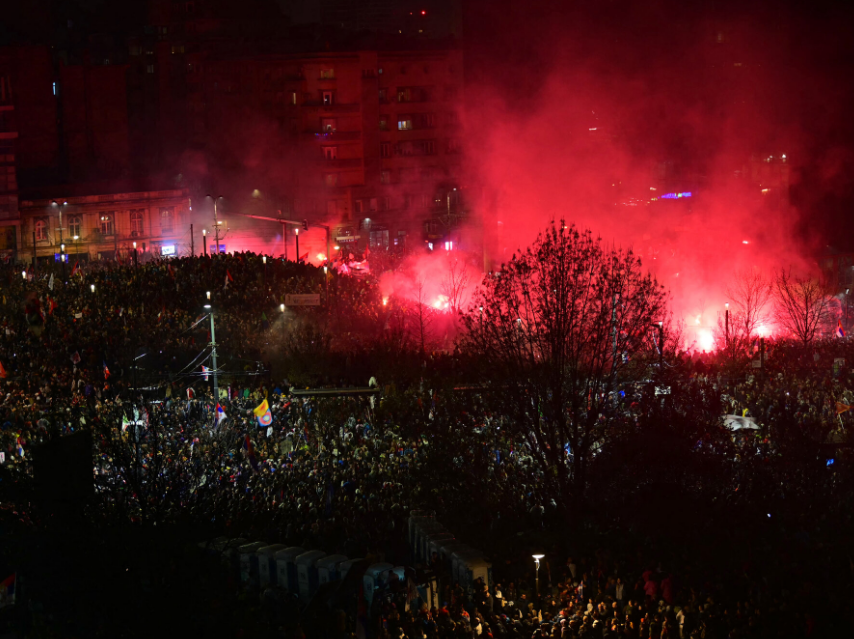
This friction between attracting foreign capital and upholding environmental and democratic standards is not confined to Albania; comparable tensions arose earlier in Serbia. In 2021, nationwide resistance targeted the Jadar lithium project spearheaded by the Anglo-Australian mining corporation Rio Tinto, citing risks of groundwater contamination and opaque executive agreements. When the Serbian government introduced amendments to the Law on Expropriation to ease land acquisition for private projects, public pushback forced an executive withdrawal of the bill. In January 2022, then-Prime Minister Ana Brnabić announced the formal termination of the spatial plan for the mine.
Read also: How the new generation is battling for democracy in Serbia, for collective memory in Bosnia
Nevertheless, civil society monitoring – notably by the Renewable and Environmental Regulatory Institute – revealed that administrative channels were never entirely closed. State authorities repeatedly extended procedural deadlines rather than dismissing the permits outright. This trajectory culminated in July 2024, when the Serbian Constitutional Court invalidated the government’s 2022 revocation of the spatial plan, effectively restoring the regulatory footing required for the mine’s administrative process to resume. Both the Kushner and Rio Tinto initiatives expose a recurring pattern across the Western Balkans: the instrumentalization of fast-track strategic investment statutes to circumvent public scrutiny. Both countries continue to encounter structural obstacles in satisfying the fundamental criteria – specifically judicial independence, public procurement transparency, and the rule of law required for EU accession.
The EU in the Western Balkans
The governance deficits highlighted by these protests pose a critical test for the credibility of the enlargement framework. In response to the Albanian demonstrations, EU Enlargement Commissioner Marta Kos noted that Tirana had pledged compliance with European environmental norms. However, civil society groups like PPNEA criticized this stance, arguing that executive assurances do not resolve whether the legislative architecture itself – notably Law No. 21/2024 – breaches Chapter 27 (Environment and Climate Change) of the acquis. This institutional posture stood in sharp contrast to the European Parliament, which formally voiced alarm regarding the Vjosa-Narta protected area, urged the repeal of the contested law, and saw several MEPs travel to Tirana in solidarity with demonstrators.
While the Albanian case reveals an institutional divergence between the European Commission and the European Parliament, Serbia illustrates a normative contradiction within EU external action itself. In the case of the Jadar project, the Union’s drive to secure domestic supplies of critical raw materials under the European Green Deal and diminish reliance on external powers like China has collided with its commitment to local accountability and democratic norms. This tension between enforcing the rule of law and economic interest is visible in particular in Germany, which is seeking to access a lithium source, especially for the automotive industry.
Read also: Benefits and drawbacks of EU accession for the Western Balkans
Consequently, within member states risked eclipsing foundational accession conditionality. Both cases also show a similar question addressed by Hungary: when a certain regime is a hybrid between democracy and autocracy, it can modify constitutions and norms and curb the judiciary’s power to achieve certain outcomes through the law itself.
Between ambiguity and entrenchment
The EU’s overall posture toward these grassroots mobilizations has been characterized largely by institutional ambiguity. In Serbia, this ambiguity became even more pronounced during subsequent public protests, such as those following the lethal canopy collapse at the Novi Sad railway station. Despite verbal appeals for restraint and adherence to the rule of law, local civil society widely saw Brussels’ interventions as detached and ineffective.
The EU’s ambiguity and selective enforcement of conditionality benchmarks on Serbia and Albania have broader political implications. Firstly, the limits of the EU’s approach are particularly evident in the foreign policy of the two countries. President Aleksandar Vučić has remained a primary diplomatic interlocutor for Western integration frameworks – despite his mixed record and reputation as a rather independent player in positioning Serbia between the EU and powers such as China and Russia. Meanwhile, Albania’s Prime Minister Rama has cultivated an international profile as an indispensable, pro-Western reformer, even while domestic governance faces deep civic contestation.
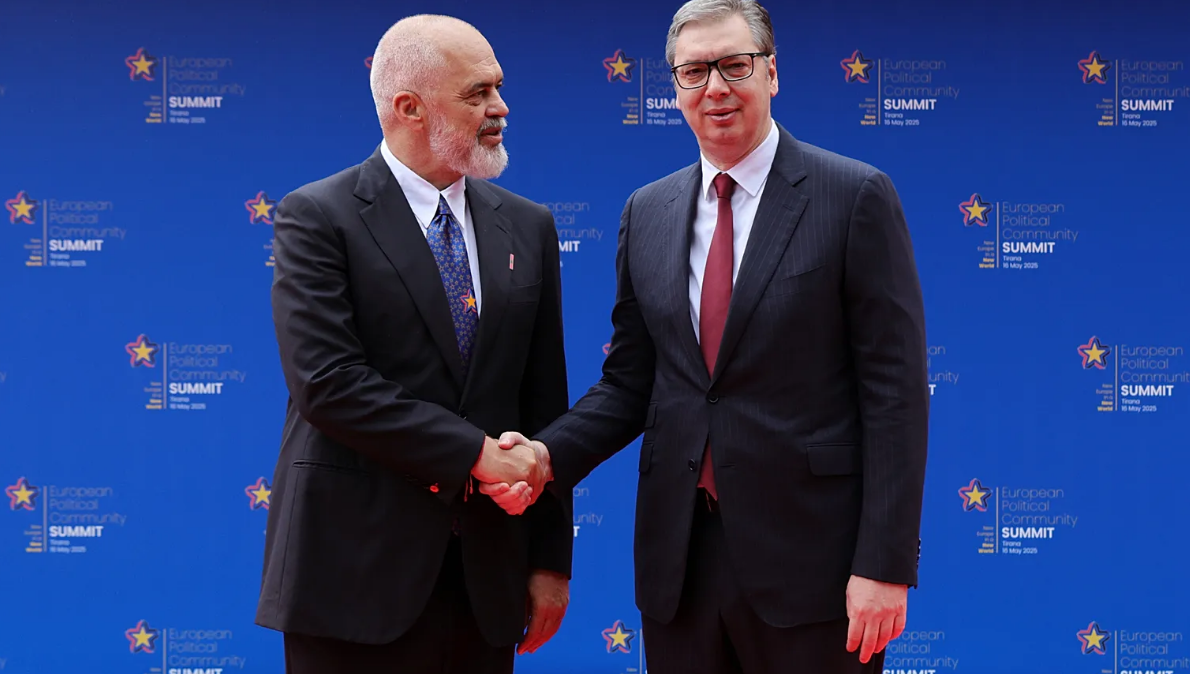
At the same time, Rama and Vučić have built an unusual cooperation and “friendship”, despite the unresolved question of Kosovo’s independence and their contrasting positions on foreign policy. This “unusual friendship” has a certain impact on the accession process of both countries, especially because ensuring “good neighborliness” is a fundamental condition for the Western Balkans. Both leaders advocated the Open Balkan initiative, for example, alongside the Prime Minister of North Macedonia, promoting a new economic and political space in the Western Balkans.
Recently, the two leaders proposed to the EU Enlargement Commissioner Marta Kos to suspend the implementation of their veto rights once in the Union, in order to make the accession process more politically viable. Although the proposal was dismissed by the EU, it represents a possible common path for the two countries, yet more strategic than genuine.