The United States’ global strategy and the absence of Europe
It is not easy to identify a coherent strategy behind the actions of the Trump administration, but attempting to do so can help us understand the direction of the world today. We need to start with the changes to globalization over the past decade, which challenge all countries to reflect on their roles and priorities. This points to an attempt to cement US leadership in a global competition over energy, trade and currency. At the same time, Washington is trying to stymie the emergence of an alternative bloc led by China, which seeks to alter the global balance of power.
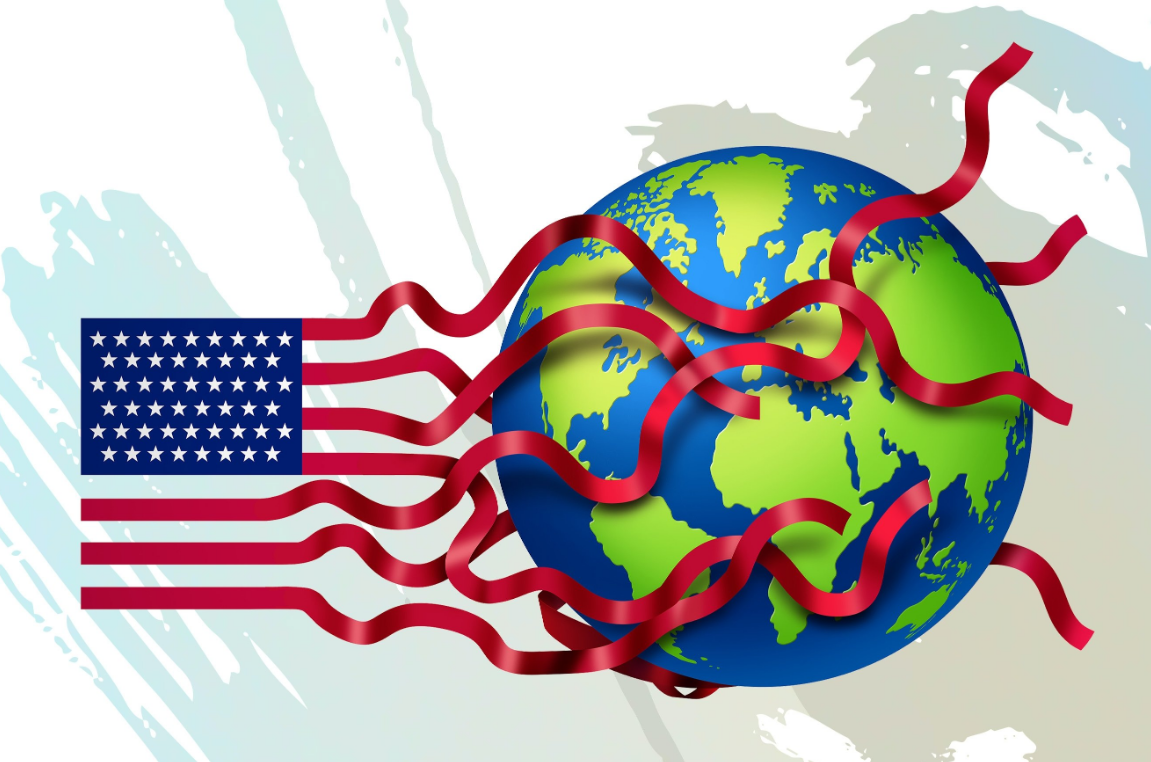
The roots of this change date back well before the arrival of Donald Trump. With the end of the Cold War, the West began to extend its ideological and economic sphere of influence. The process was initially based on financial markets and trade, and was gradually accompanied by “out-of-area” military actions by NATO, from the Balkans to the Middle East. While often marred by contradictions, the goal was clear: a system in which Western norms – including financial rules – were the unchallenged basis of the global order.
Opposition to this tendency emerged gradually, from the initial proposal of the Russia-China-India “Strategic Triangle” by Russian Foreign Minister Yevgeny Primakov in the late 1990s to the creation of various alternative organizations for international cooperation, which ultimately led to today’s BRICS, expanded to numerous partner countries around the globe. The goal has been to establish economic relations that cannot be controlled by Western institutions, in a “multipolar world” where the United States and Europe are no longer able to dictate terms based on their dominant position.
The 2008 collapse of the speculative bubble on financial markets, that accompanied the post-industrial weakening of Western economies, marked a fundamental shift. The ineffective response from governments allowed for the emergence of populist leaders who forced a rethinking of the basis of the liberal system. The idea that well-being and democracy were based on free markets lost credibility, and a new consensus began to emerge around the need to focus on national interests as a means of maintaining global leadership.
By the time Donald Trump was elected president in 2016, the shift had already begun, with his predecessors having identified China as the main strategic adversary and initiated economic projects to counter Beijing’s growing influence. The populist shock, followed by the Covid-19 emergency, then allowed for breaking the resistance to protectionism and industrial policy; the West seemed to enter a “post-global” period, in which renewed government intervention would underpin the attempt to rebuild real power, allowing for more effective competition with the emerging powers outside of the liberal sphere of influence.
The second Trump administration has taken this concept of competition to the extreme, using force to get other actors to play by Washington’s rules. The target is China and the aspirations of the BRICS: the goal is to block the creation of independent trade and monetary relationships that could challenge the pre-eminent role of the United States. There are two keys to this strategy: energy and currency. The first point is evident in the various military actions by the Trump administration: the president made no secret of his plans to manage oil exports from Venezuela, considered much more important than promoting democracy. The war in Iran has brought the strategy to a new level, seeking control over energy exports from the Persian Gulf. It has not exactly worked as planned, but it is telling that Trump’s response to Iran’s success in inflicting global pain was to impose his own blockade in the Strait of Hormuz, aimed at pushing China and other Asian countries – which depend on exports from the area – to pressure Iran to accede to US demands. The next target for regime change – Cuba – is also a “partner” state of Russia and China, showing the aggressive nature of the US approach: no longer an indirect competition for markets and influence, but an iron fist seeking to impose a new reality on its strategic adversaries – and to some extent on its allies as well.
Read also: How the US-Israeli war on Iran is making the world more multipolar
Energy flows are essential to this “New Great Game”, as some have called it, given the heightened needs posed by the expansion of artificial intelligence, which can affect all sectors of the economy and military operations. Accompanying this is the aim of guaranteeing the dollar as the anchor of global exchange. Limited trading arrangements in currencies such as the yuan are not to be transformed into a broader system that could challenge US influence. The overall goal, as argued by Jim Crupi in the Wellington-Altus “Market Insights” newsletter, is to make sure that the BRICS never matures from slogans into architecture. This entails edging Russia back into the Western trading system, anchoring energy-rich countries such as Canada to the US, and expanding the role of the dollar beyond US Treasuries to alternative assets such as cryptocurrencies.
One glaring question in this new framework is: where is Europe? The fear that the Old Continent will be marginalized in a new phase of global competition between the US and China is real. European capitals face contradictory pressures: the prospect of a reduced US strategic commitment, alongside constant threats of economic coercion to remain in Washington’s good graces.
Read also: How Europe is moving on without the US
To date, despite repeated proclamations about strategic autonomy and competitiveness, the European Union has often prioritized political goals over stability – for example, by giving priority to the shift to renewables while cutting fossil fuel supplies from Russia. This reflects a broader self-image of European nations pursuing virtuous policies, in contrast to what is seen as the egotistical behavior of the Trump administration. Yet this creates a paradox: defending the liberal order while facing growing internal pressure to adopt a more hard-headed approach to global competition. The current energy shock illustrates the risks of recent choices. Self-sufficiency remains distant, while disruptions in external supply chains have immediate economic consequences.
The area where Europe appears more willing to act is defense investment – itself a sensitive issue for public opinion – with the aim of taking on greater responsibility within NATO. A parallel effort is emerging to push back against US pressure by identifying American economic vulnerabilities, as reported by Bloomberg. There is some precedent for this approach, notably in China’s response to Trump’s tariffs. However, significant constraints remain within the EU’s institutional framework.
Beyond the snail’s pace of decision-making in Brussels, it is striking that debates still focus on budget rules and state aid despite a radically changed economic environment. Europe is beginning to adjust in specific areas, but remains reluctant to revisit its broader economic assumptions, which are still rooted in the model of globalization. As the New Great Game intensifies, European nations will need to define their interests more clearly – and pursue them with fewer ideological constraints.