
The unlearned lessons of war: Four years since the invasion of Ukraine
Four years ago, on 24 February 2022, it was hard to imagine that the war unleashed by Russia’s invasion of Ukraine would still be grinding on, stubborn and unresolved. Yet here we are: forty-eight months later, and any neat ending still feels out of reach. In that time, the conflict has kept geopolitical analysts busy, given military strategists fresh material, emboldened populists and enriched those trading in arms and energy. We have become fluent in the language of war as spreadsheet: troop numbers, sanctions packages, supply chains, alliances, output levels. Everything tallied, graphed, compared.
And yet the central lesson of this war is not numerical but moral. It is a lesson we seem determined to forget: war does not behave. It slips its leash. It rarely follows the tidy scripts drafted in ministries and presidential palaces. Time and again, it veers away from the aims proclaimed on the day artillery fire drowns out diplomacy.
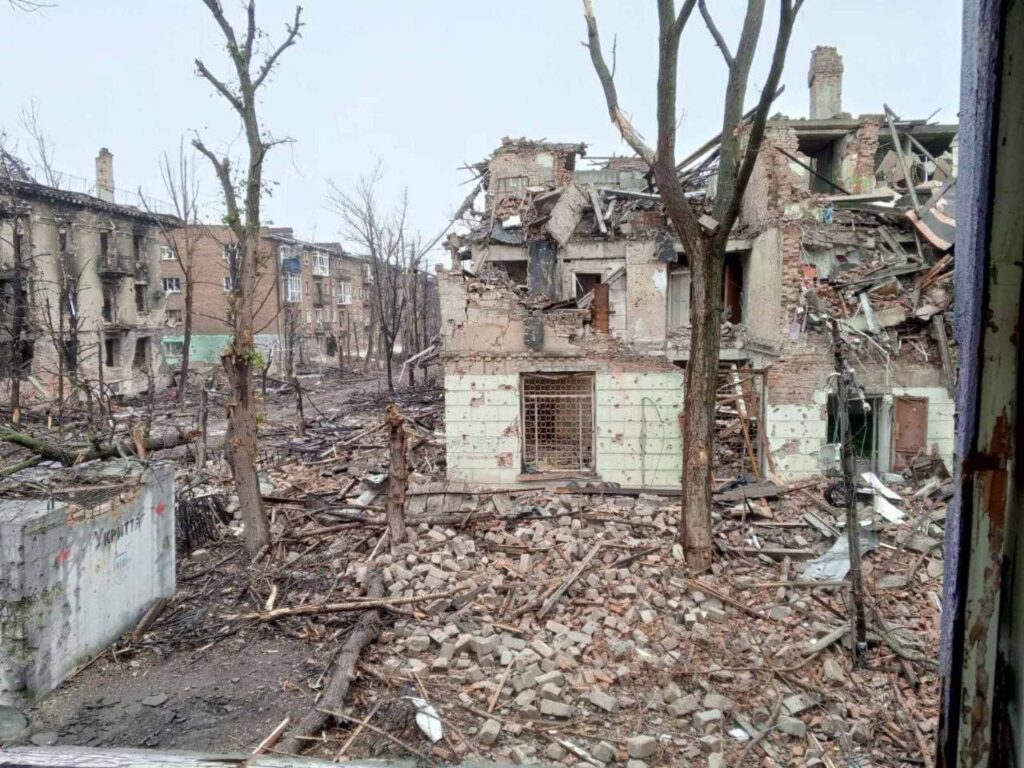
Miscalculations, everywhere you look
For the Kremlin, the miscalculation was foundational. The official narrative — that Ukraine belonged naturally within Moscow’s “sphere of influence”, bound by shared culture and history — was always more smokescreen than strategy. Vladimir Putin was not seeking minor concessions; he was aiming for subjugation. The ambition was to recast Ukraine as a pliant “second Belarus”, safely fenced off from western institutions and ideas.
It is difficult to sustain the fiction that this was about protecting Russian speakers or securing resources when, on that February morning, columns of tanks rolled towards Kyiv. The expectation of a swift collapse ran headlong into a resistance few had fully anticipated. Whatever the eventual territorial map, something irreversible has happened: a Ukrainian nation, tempered by invasion, is unlikely ever to accept Russian diktat as its horizon.
But the West, too, misread the script. When Washington began ramping up support for Kyiv — notably with the delivery of Javelin missiles under Donald Trump in 2017 — the underlying assumption was that Moscow would bluster but ultimately acquiesce to Ukraine’s steady drift towards NATO. Sanctions, coupled with the threat of exclusion from global payment systems, were expected to exert decisive pressure.
Instead, Russia had prepared. In the years after 2014, its financial and industrial systems built a kind of economic shock absorber. Sanctions have bitten, but they have not paralysed the war machine. The failure to seize Kyiv and the setbacks that followed did not produce collapse. Moscow adapted, absorbing losses without triggering intolerable domestic upheaval.
There was another surprise. Much of the so-called “Global South” declined to join the sanctions regime. The economic burden fell disproportionately on Europe — particularly awkward given that the US economy was already relatively disentangled from Russia’s.
The broken promises of 2025
Kyiv, for its part, placed a heavy wager on western constancy. The calculation was simple: support would endure because the stakes were existential. But endurance proved more fragile than rhetoric. Western defence industries struggled to match Russian production. And after Trump’s return to the White House, Washington abruptly tightened the spigot. Europe, as with sanctions, found itself once more cast as paymaster of last resort, trying to stave off Ukrainian bankruptcy.
The symbolism was bruising. In early 2025, Volodymyr Zelensky endured a public dressing-down in the Oval Office, a moment that crystallised Kyiv’s new vulnerability. Soon after came Washington’s tentative overtures to Moscow, culminating in a Trump-Putin summit in Alaska that generated headlines but little else.
Read also: Russia, Ukraine and the memories of World War Two
Meanwhile, the war’s daily toll continued. Ukrainian cities remain under bombardment; the power grid is repeatedly targeted; diplomats speak more openly of possible territorial concessions. Russia, despite the long-term strain, has maintained internal stability. Crucially, trade with China has surged since 2019, providing Moscow with both an economic cushion and diplomatic cover. The Kremlin, eyeing Odesa, shows little urgency at the negotiating table.
War of inertia
Whether Moscow’s confidence is justified is another question. What is clear is that both sides are now playing for time. In western capitals, some argue that sustaining Ukraine — even at a reduced tempo — is enough, on the theory that a prolonged wound will eventually exhaust Russia. In the Kremlin, the counter-bet is that Ukrainians and their allies will tire first, worn down by mounting costs and casualties.
Hovering over all of this is a fog of political ambiguity. No European government, nor the United States, has yet offered the kind of security guarantee that would anchor Ukraine’s independence after a ceasefire. In Moscow, no one appears willing to pay that price for peace. Washington, having long since abandoned the promise of “peace in 24 hours”, seems increasingly distracted by crises elsewhere.
After four years, this is no longer only a war of attrition. It is a war of inertia — sustained less by momentum than by the absence of decisive will. The great powers circle, calculating advantage, extracting what political or economic rent they can. The bill, as ever, is paid in Ukraine’s cities and fields, by a country that continues to bear the heaviest cost of everyone else’s misjudgements.
Here for the Italian version of this article
