
Russia in the Red Sea: logic and implications of a naval base in Port Sudan
Recent revelations from The Wall Street Journal suggest that an agreement for a Russian naval base in Port Sudan on the Red Sea is now close. According to the American newspaper, the Sudanese government has proposed a 25-year deal with Moscow to host up to 300 troops and four warships, including nuclear-powered vessels, in exchange for air defense systems and other weapons to be used in the civil war that has plagued the country since 2023.
Reports of a possible base date back to 2017, when Omar al-Bashir’s regime, internationally isolated following war crimes committed in Darfur, sought Russia’s protection by offering a naval presence on the Red Sea shores. In the years that followed, the project was repeatedly stalled, both because of US pressure and internal Sudanese upheavals, including the fall of al-Bashir in 2019 and the troubled transition of power that led to civil war. In the clash between General Abdel Fattah al-Burhan’s pro-government forces (the Sudanese Armed Forces, SAF) and General Mohamed Dagalo’s Rapid Support Forces (RSF), Russia initially backed the anti-government faction, before switching sides after the rebels established contacts with Ukraine to secure additional weapons. Since early 2025, with Moscow once again supporting the government camp, reports of a base agreement have grown more insistent.
Russia’s naval aspirations and the rationale for bases
A base on the Red Sea would meet Russia’s naval needs. Especially after the war in Ukraine, the Russian Federation is seen primarily as a continental power, but the Kremlin’s maritime ambitions tend to be underestimated. Sea power remains one of Russia’s strategic priorities, and Moscow is investing heavily in the development of its naval capabilities. According to Nikolai Patrushev, one of Putin’s closest advisers and President of the Maritime Board, Russians “are simply obliged to develop the navy” because the sea is becoming the main theater of the West’s “anti-Russia strategy”. The emphasis placed on the maritime domain is reflected in shipbuilding production, which has supplied the Navy with 27 surface ships and submarines since 2023.
After the decline and downsizing that followed the Cold War, naval rearmament began with Putin’s rise to power and his ambition to restore Russia’s great-power status. However, as noted in an article by the US Naval War College, “today’s economic challenges remain, and Russia’s ambition to build a navy in the image of the former Soviet fleet poses an extremely difficult challenge.” The Russian Navy must balance its blue-water aspirations (the ability to project sea control at considerable distance) with the need to ensure strategic deterrence by protecting its nuclear ballistic missile submarines, as well as maintaining coastal defense. Investments in submarines, in particular, require considerable financial effort, limiting Russia’s capabilities for the production of new surface warships. Pre-Russo-Ukrainian war estimates indicated that it would take decades for Russia to commission ships above frigate size (seven thousand plus tons), a situation that has been further exacerbated by the enormous costs resulting from the current war in Ukraine. These shipbuilding constraints, combined with Russia’s current naval capabilities, result in a Russian Navy order of battle heavily weighted toward small combat units. Russia currently possesses only 31 major surface combatants (aircraft carriers, cruisers, destroyers, and frigates), the same number as in 2015, half of which are aging vessels that entered service in the 1980s and 1990s during the Soviet era and have obsolete onboard systems.
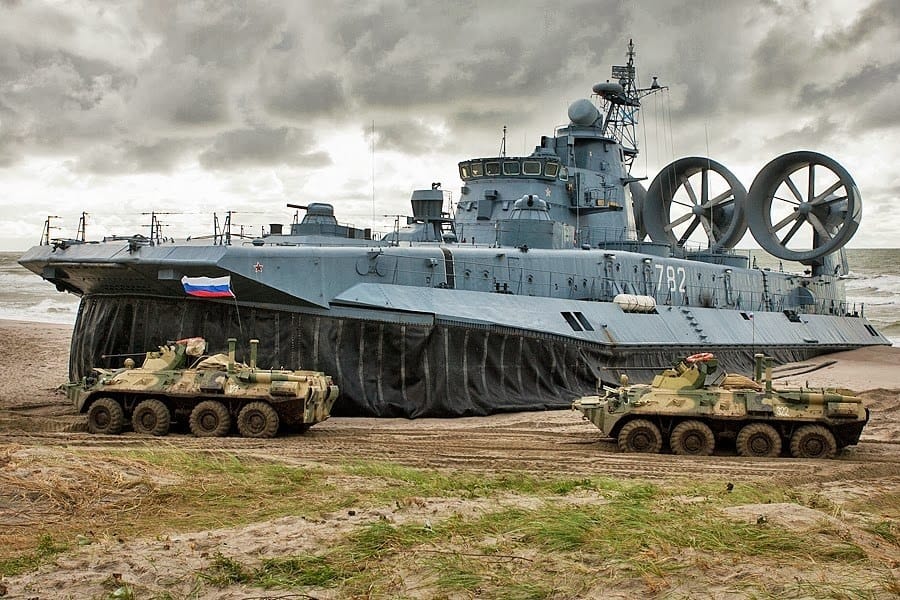
Such limitations are particularly evident in the specific case of the Black Sea Fleet, which will likely play a key role in enabling any expansion south of Suez and more generally in the NATO Southern Flank. The Fleet has lost roughly one-third of its vessels during the war in Ukraine, including its flagship, the cruiser Moskva, and now fields only five large surface combatants, two of which are frigates built in the 1980s. The rest of the fleet, which includes missile or anti-submarine corvettes, conventional submarines, patrol boats, intelligence vessels and landing ships, is ill-suited for prolonged deployments far from the Russian shores. This highlights the need for overseas naval bases to support maintenance and refueling during distant deployments, such as in the Red Sea or in the Arabian Sea. This need is reinforced by the lack of large, multi-role replenishment vessels capable of accompanying warships on long voyages, and, more recently, by the current political situation, in which many countries do not allow Russian ships to call at their ports. As a result, the Russians are currently forced to send civilian tankers alongside their combat units on longer deployments.
The importance of overseas facilities, especially in the NATO Southern Flank, is illustrated by the Tartus naval base in Syria, which, since 2013, has enabled Russia to increase its naval presence in the Mediterranean and safeguard its regional interests, including through logistic and combat support from the sea during operations in favor of the Assad regime. The Tartus base has allowed the Mediterranean Task Force to deploy various types of vessels, including the Ropucha- and Alligator-class landing ships, used to support the supply line to Syria, the Kilo-class conventional submarine, Grad Sviiazhsk-class small missile ships, and Grigorovich-class frigates, used for sea-based strikes against ISIS. However, with the regime change in Syria, the Russian Navy appears to have lost, at least partially, the ability to use this facility. This severely hinders Russian naval logistics and increases the need for bases in warm seas.
Potential benefits from a Red Sea facility
A naval base in Port Sudan would bring several benefits to Russia in strategic, logistical and political terms.
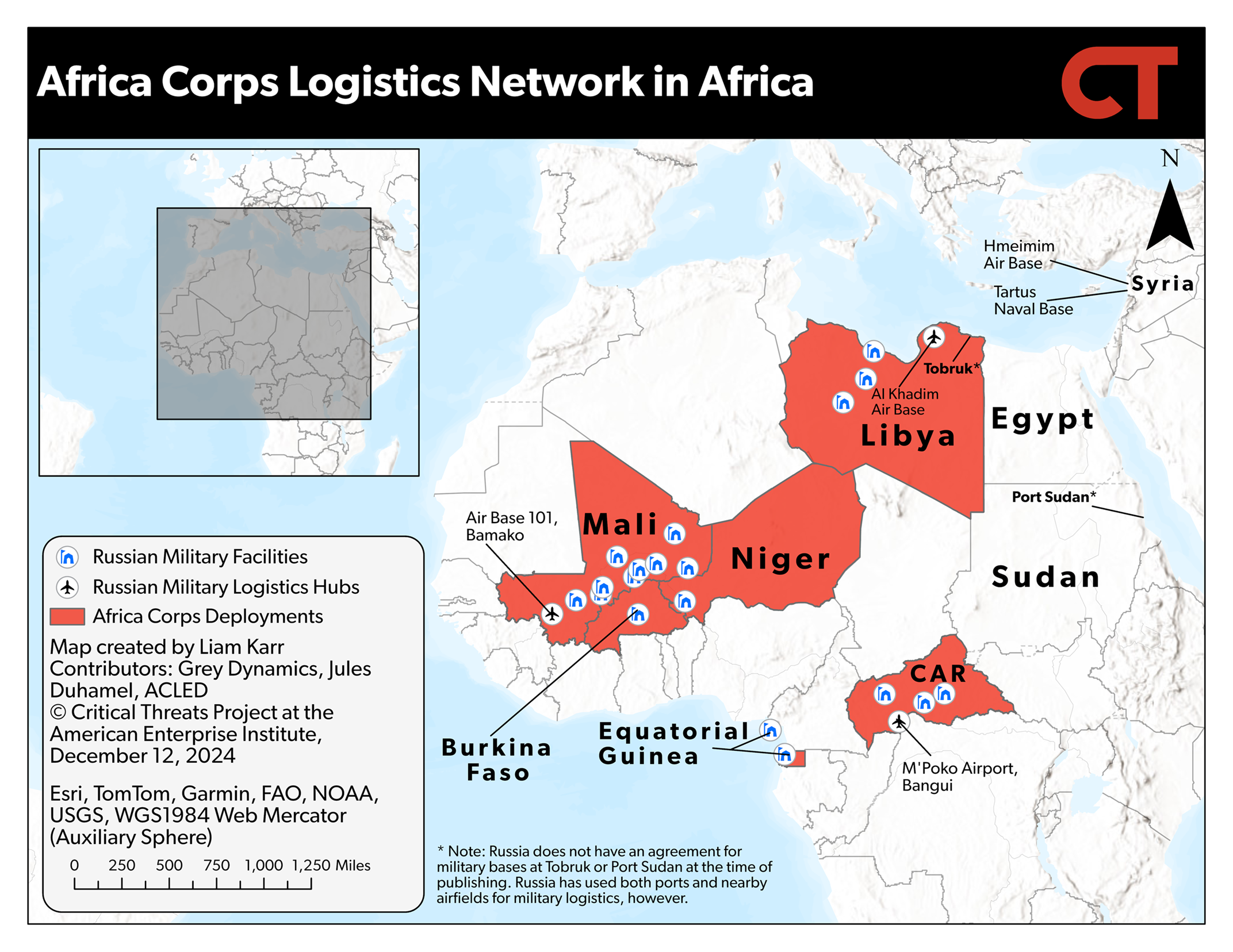
First, it would allow Moscow to project more power in Africa, strengthening the logistics chain supporting the former Wagner Group mercenaries, now known as the Afrika Corps and deployed to support pro-Moscow juntas in the Sahel and Central Africa. The shipment of weapons to Russian proxies currently relies primarily on supplies arriving in Libya by sea at the port of Tobruk and, especially, by air via an increasingly extensive network of bases. The addition of another port hub would further strengthen this logistics.
Second, a naval base would give Moscow a stable presence and the ability to intervene on one of the main global maritime trade routes. On the one hand, should the Kremlin wish to target supply chains critical to Europe, Russia would have more opportunities to directly or indirectly affect trade flows. The Navy would be able to acquire greater intelligence on commercial vessels transiting the Red Sea and then transfer this targeting data to the Houthis or Iran, as already partially happened, or strike any target in the Red Sea with Kalibr missiles without a Russian warship even leaving harbor. On the other hand, Russia would have a greater chance of protecting ships belonging to the so-called “Shadow Fleet”, which are used to circumvent Western sanctions and export Russian oil. According to a Kpler report, Russian oil was the only type of cargo through the Suez Canal that did not suffer a decline following the Houthi attacks in the Red Sea, remaining at the pre-attack rate of approximately 55% of all Russian crude exports. Recently, Russia has shown its intention to protect shadow tankers through naval escorts.
Read also: The geopolitical challenges of the energy market in the Red Sea
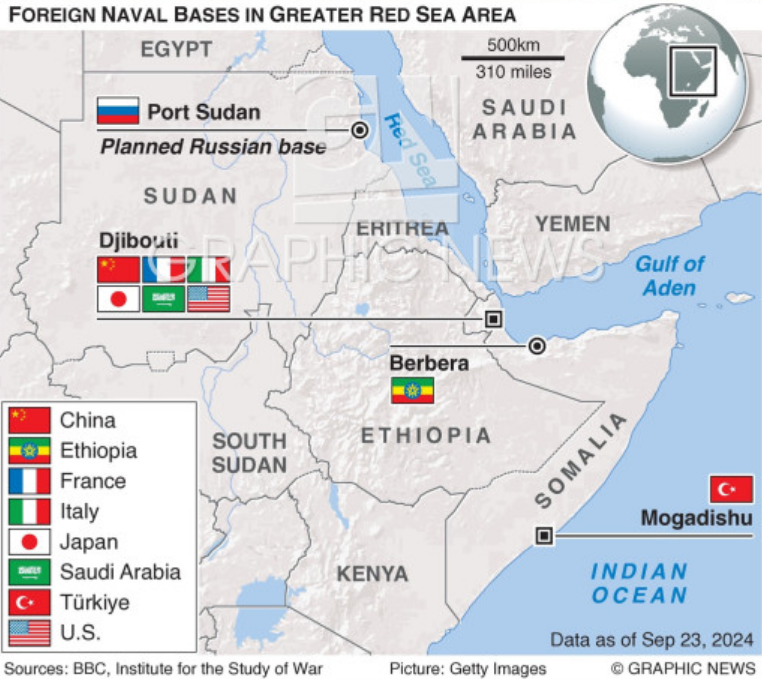
Third, a facility in Port Sudan would provide the ability to monitor and, if necessary, constrain the activities of Western naval forces deployed in the region. The Red Sea hosts numerous NATO naval units engaged in multinational or European operations to protect the Sea Lines of Communication as well as US, Italian and French naval bases in Djibouti (where German and Spanish warships are often anchored). A naval base in Sudan would allow the Russian Navy to employ air and naval intelligence, surveillance and reconnaissance assets to gather information on NATO capabilities and tactics, but also to create an anti-access area denial (A2/AD) bubble around the base to deter the movements of Western forces in adjacent waters. Russian interest in the region has recently been confirmed by the presence in the Red Sea of a Pacific Fleet flotilla, whose position suggests an attempt to monitor the joint Israeli-US exercise “Intrinsic Defender”, which began on December 7th in those waters. Even in previous years, several Russian intelligence ships have been observed in the western parts of the Arabian Sea.
Limitations and constraints
Despite these potential advantages, a naval base in Port Sudan also presents several constraints and limitations.
The first obstacle concerns the difficulties in supplying the facility. Base defenses, such as air defense and electronic warfare systems, as well as social infrastructure (a hospital block, desalination plants) can be delivered by air to Port Sudan’s airport (20 km from the coast) or by sea. These already complex logistics, however, are hampered by current political circumstances. Russian military air transfers are heavily dependent on the Syrian base at Hmeimim, the last Russian outpost reachable by direct cargo flights from Moscow. The use of this base, crucial for organizing the various supplies of weapons and equipment to Africa, is jeopardized and limited by the fall of the Assad regime and the new Syrian government’s ambiguity regarding the future of Russian military bases. Regarding sea transfers, a similar reasoning applies to the Syrian base at Tartus, compounded by the enormous logistical problem created by the closure of the Dardanelles Strait following the war in Ukraine. Since March 2024, the closure of the Bosphorus not only to Russian warships but also to commercial vessels carrying weapons and equipment has forced Russia to switch from a 3,000-nautical-mile route between Novorossiysk and Tartus to a 12,000-nautical-mile Atlantic route. This, resulting in high economic costs and exposing the transfers to a greater risk of interception by NATO forces, led to a significant decrease in the number of shipments and in the level of supply to Russian overseas bases. To supply a new base in Sudan, Russia would therefore have to resort to the Atlantic or Pacific route without the possibility of passing through the Bosphorus.
A second limiting aspect is the technical one. As indicated by Russian analysts, the Port Sudan base would have significant power supply problems. The facility would be located near a city of over half a million people, whose energy depends on a single diesel-mazut thermal power plant with a capacity of 337 MW, insufficient even for civilian needs. The Russian base would need to rely on self-sufficiency via base-installed diesel generators, with fuel imported from Russia due to high local petroleum costs. Furthermore, the port’s infrastructure appears to be quite dated and limited, especially for hosting nuclear-powered vessels like those proposed in the agreement. These require specific infrastructures and more stringent safety measures due to the risks deriving from the presence of the nuclear reactor.
Then, there is a strategic limitation, given the geographic location of Port Sudan. To access or exit the Red Sea, the Russian navy would be forced to navigate two chokepoints: Bab al-Mandeb, particularly dangerous given that the Houthis have sometimes inadvertently attacked Russian vessels, and above all the Suez Canal. The need to pass through Suez to access the Mediterranean is particularly unfavorable because it makes the maneuvers of Russian naval units exposed to detection and tracking. This applies not only to surface vessels but also to submarines, which are unable to pass through the Canal undetected due to its extremely shallow waters.
Finally, a political consideration, linked to Sudanese instability. A base in the African country would leave Russia particularly exposed to internal upheavals in Sudan, as recently occurred in Syria. First, a possible defeat of the government faction in the ongoing civil war would risk nullifying the agreement reached with al-Burhan. Second, the ongoing conflict poses a significant risk to the security of the Russian base. In May 2025, a rebel drone attack severely damaged Port Sudan’s port infrastructure, demonstrating that domestic instability would threaten the naval facility. Third, as has happened in the past, the Sudanese government’s willingness to uphold the agreement could be influenced by US pressure and the fear of international isolation following the strengthening of relations with Russia.
Overall, a potential Russian naval base in Port Sudan would offer Moscow an opportunity to address some of its naval requirements and expand its influence in the Red Sea region, but it would also come with significant constraints and risks. Such a facility should neither be seen as a strategic “game changer” nor as a direct substitute for Tartus in terms of power projection. Logistical bottlenecks, geographic vulnerabilities, technical shortcomings and Sudan’s chronic instability all limit the military value of the base and complicate its long-term sustainability.
That said, even a modest and constrained Russian presence on the Red Sea would represent a relevant variable for NATO, particularly in the context of threats coming from the Alliance’s Southern flank. It is therefore likely that Western pressure on Sudanese leaders to halt, delay or dilute the agreement will intensify. In this regard, the partial denials issued by Sudanese sources following the Wall Street Journal revelations may already reflect an attempt to manage relations with Washington and avoid further international isolation.
Ultimately, the future of the Port Sudan project will largely depend on domestic dynamics in Sudan itself. The evolution of the civil war and the SAF’s need for Russian weapons and military support will shape the extent to which General al-Burhan is willing to absorb diplomatic costs in exchange for Moscow’s backing.