
Danish options on Greenland
The Dannebrog is one of the oldest national flags in the world. According to legend, Denmark’s national flag was given by God and descended from heaven. It was on the 31st of March 1917 that the flag came down again. This time it happened on the Caribbean island of Saint Croix, where a small Danish military salute was performed while the national anthem Der er et yndigt land – There is a lovely land – was played. Immediately afterwards, the American flag was raised. This moment marked the end of 251 years of Danish colonialism in the tropics.
Shortly before, the United States had purchased Saint Croix, Saint Thomas, Saint John and Waterland from Denmark in exchange for 25 million dollars in gold – approximately 722 million dollars in 2026. The Danes owned the islands since the seventeenth century and had mainly run slave plantations there. After the abolition of slavery, the islands turned to be useless for them. Washington expressed interest and negotiations started, resulting in the purchase of the Danish Caribbean possessions.
Today, the tropical islands are no longer called the Danish West Indies, but are known as the US Virgin Islands. It is a US territory that receives military and diplomatic protection from Washington. This historical purchase must have given President Donald Trump appetite for more in 2019: at the time, he suggested buying Greenland. Danish Prime Minister Mette Frederiksen was surprised and said that the country, which is autonomous but part of the Danish kingdom, is not for sale. On his turn, Trump cancelled a planned visit to then Queen Margrethe II, forcing the royal palace to call off all preparations.
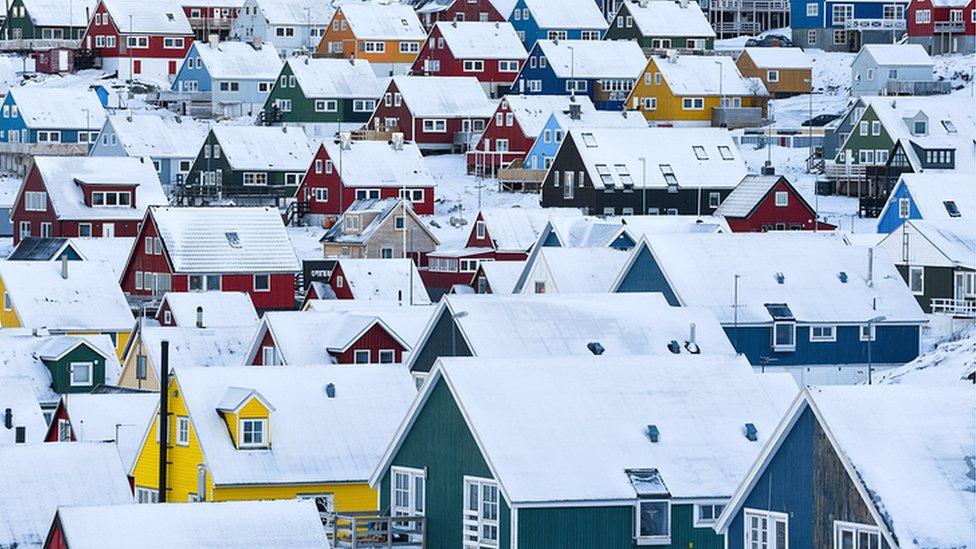
Greenland and Denmark. Both countries have a long shared history. The largest island in the world was discovered by Norsemen in the ninth century and subsequently colonised. In the twelfth century, the Inuit came to Greenland from what is now Canada. The Nordic colonists did not last, but the eskimo’s, as they where once called, did. The Inuit continued to live in Greenland, giving the area an American Indian cultural character. Nevertheless, the Danes never relinquished their claim to the island.
In 1721, aspiring to become a colonial power, Denmark sent a missionary expedition to Greenland with the stated aim of reinstating Christianity among descendants of the Norse Greenlanders who may have converted back to paganism. When the missionaries found none of them, they baptised the Inuit they found living there instead. Denmark developed trading colonies along the coast and imposed a trade monopoly and other colonial privileges on the area. During World War II, when Nazi Germany invaded Denmark, Greenlanders became socially and economically less connected to the motherland and more, though informally, connected to the United States, which defended the region towards the Germans.
In 1953, Denmark regained full control over Greenland, after which agreements were made with Washington: a large American military base was established (Thule Air Base, recently renamed Pituffik Space Base) and the area was incorporated into NATO. During the period of decolonisation, the Greenlanders’ call for independence also grew stronger: the country gained home rule in the 1980s and withdrew from the European Economic Community, the forerunner of the European Union, in 1985. It did, however, remain in NATO. Following a referendum, Greenland gained full autonomy within the Kingdom of Denmark.
Fast forward to 5 November 2024: four years after losing the presidential election to Joe Biden, Donald Trump wins the presidency again. He is allowed to return to the White House and still has the same ambitions for Greenland as he did in 2019. Trump does not make them public immediately, and Copenhagen remains silent: it seems that no one in Danish politics is really concerned about what might lie ahead or that the ones who are, lay low in order to avoid a new potential clash with the incoming American president.
In Denmark, Social Democratic Prime Minister Frederiksen is still in power. The country’s defence policy until 2027 includes a general increase in the priority given to defence after years of cutbacks, with a focus on the North Atlantic and the Arctic region. There has also been a political debate in the Danish parliament about the need for more capabilities in the Arctic region, such as ships, surveillance equipment and a land-based military presence.
Frederiksen governs a broad moderate coalition formed with her left-wing party Socialdemokratiet, the right-wing liberal party Venstre and the centrist party Moderaterne, led by her predecessor Lars Løkke Rasmussen. He is currently the Minister of Foreign Affairs. Frederiksen and Rasmussen are taken by surprise in December 2024, when Trump publicly reiterates his desire for the United States to own or control Greenland, primarily for reasons of ‘national security’. The Danes’ response is and remains: Greenland is not for sale.
In December 2024, Frederiksen also referred to statements made by the authorities of Greenland itself, stating that the country belongs to the Greenlanders and Denmark, and that cooperation with the US must take place on respectful terms. After this, things went quiet and everyone waited for Trump’s inauguration on 21 January 2025. The rest is now history: once in the White House, Trump continued to make his claim on Greenland, his son landed there for a “private trip” and Vice-President JD Vance also travelled to the island, where he visited American soldiers.
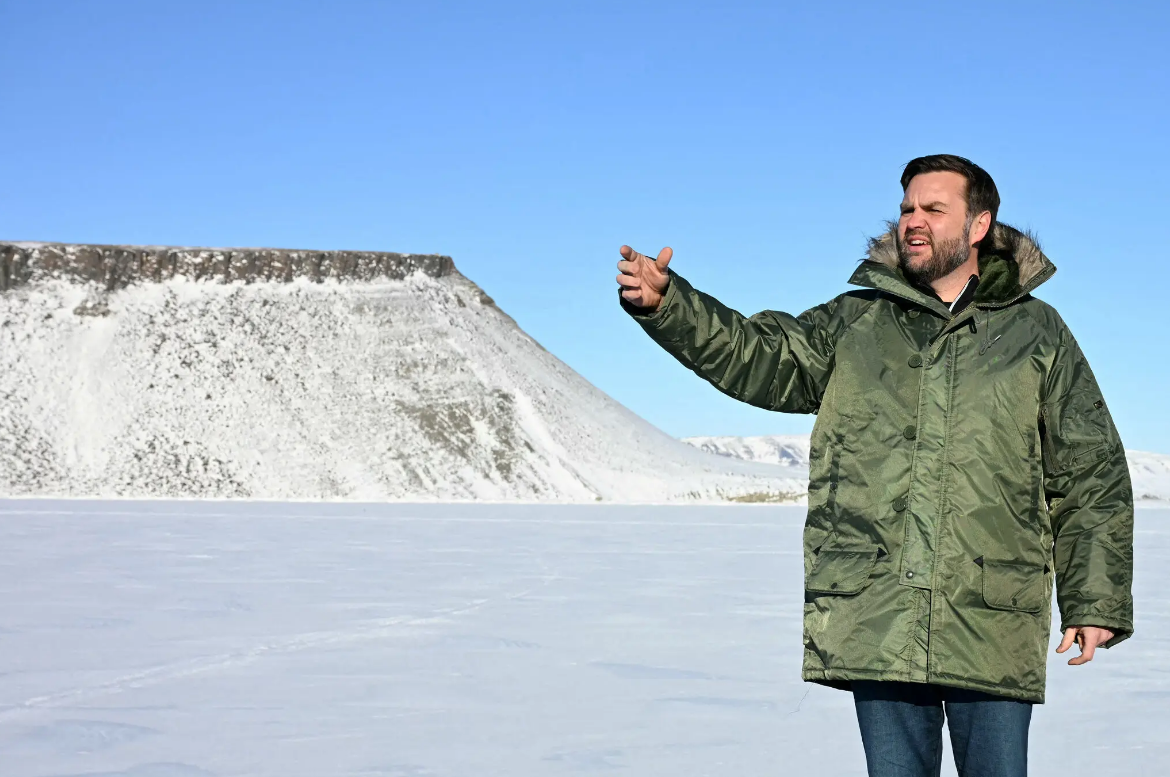
After the American action in Venezuela on January 2nd, where President Nicolas Maduro was kidnapped to be tried in the US, Trump’s claim on Greenland returned on the table. ‘We need Greenland from the standpoint of national security, and Denmark is not going to be able to do it,’ Trump told reporters aboard Air Force One. Afterwards, it was his adviser Stephen Miller who said that the military option to take Greenland was not off the table, after which Prime Minister Frederiksen said that an American invasion of Greenland would mean the end of NATO. Somewhat later, Vice President Vance toned down the American message. He stated the US does not intend to use military force to take control over Greenland.
Talks between the American and Danish foreign ministers on the issue are scheduled to take place soon. The impression given is that the Danes are lagging behind and allowing themselves to be taken by surprise. They have to get their act together. Frederiksen’s tough ‘NATO statement’ is understandable, but does not help to defuse the situation. Instead, it may only motivate Trump further to want to take over Greenland. However, the Danes have done a good job of lobbying in Europe: important European NATO countries such as France, Germany, Spain and Italy support Copenhagen.
Italian Prime Minister Giorgia Meloni is also right to rule out military intervention by America in Greenland. ‘The debate is not only one which involves Europe, it is also one which involves NATO. I think it is clear to everyone the implications it would have for the future of the Atlantic alliance. A choice is an option of this kind. It is the reason why I do not consider it realistic.’
But what is realistic? The European NATO countries could indeed start a new mission in Greenland together with the US and Canada. According to Trump and his administration, Washington needs the country for military strategic purposes. Yet, there is already an agreement between his country and Denmark stating that the US military has access to Greenland. On this basis, much more could be developed. During the upcoming bilateral conversation, the Danish will point this out and, with the support of the rest of Europe, must insist on a NATO mission in Greenland to protect the Arctic region from Russia and China – and to protect themselves from an American invasion on Greenlandic soil, however unlikely this may sound.
And do not forget, Greenland is rich in raw materials and minerals. It is well known that Mr. Trump is certainly interested in them. For example, he already closed a deal with Ukraine (although a bit short on details) whereby American companies will extract raw materials over there once the war with Russia is over. Trump could also conclude a similar deal with Copenhagen. The Danes have little choice here: the country is obviously too small to defend itself against the United States.
However, the Danes do have another trump card: His Majesty King Frederik X and Her Majesty, Queen consort Mary. Trump loves monarchies and seems to be very impressed by palaces, pomp and pageantry. If all ends well, this whole nightmare could be concluded with a visit by Trump to the Danish King and, possibly, a visit to Greenland by the two of them. As crown prince, Frederik made a long journey through Greenland, in 2000. He knows the area very well and enjoys being there. Perhaps he could show Donald Trump around.