How the war in Ukraine reshaped Russia’s ties with the former Soviet space, and beyond
The invasion of Ukraine – a territorially large country that, until 2022, had played a relatively marginal role in global affairs – has acted as a catalyst, accelerating the fragmentation of the international system. Through far-reaching spillover effects, the invasion has driven the consolidation of opposing blocs, the resurgence of geopolitics and hard power, and possibly even the rise of the Global South as a compact group, prioritising strategic autonomy and national interests over ideological alignment with the Western-led liberal order.
What has most surprised observers and strategic planners is Kyiv’s resilience, which not only prevented the success of the blitzkrieg initially pursued by Moscow, but continues – over four years into the conflict – to sustain a prolonged military effort, forcing Russia to restructure both its military doctrine and economy toward a war of attrition.
The conflict has now surpassed in duration the Soviet campaign against Nazi Germany during World War II (1,418 days), in which soldiers from all annexed Soviet republics participated – raising obvious questions about the Kremlin’s military capacity capabilities. The 2022 invasion has served both as a response to and an accelerator of the ongoing transformation of the post-Soviet security architecture, on which Moscow had long relied to present itself as both a regional security provider and a global power. After four years of war, pressing questions remain: how have relations with the former Soviet republics, now independent neighbours, evolved? And how does this shift reverberate strategically among the world’s major powers?
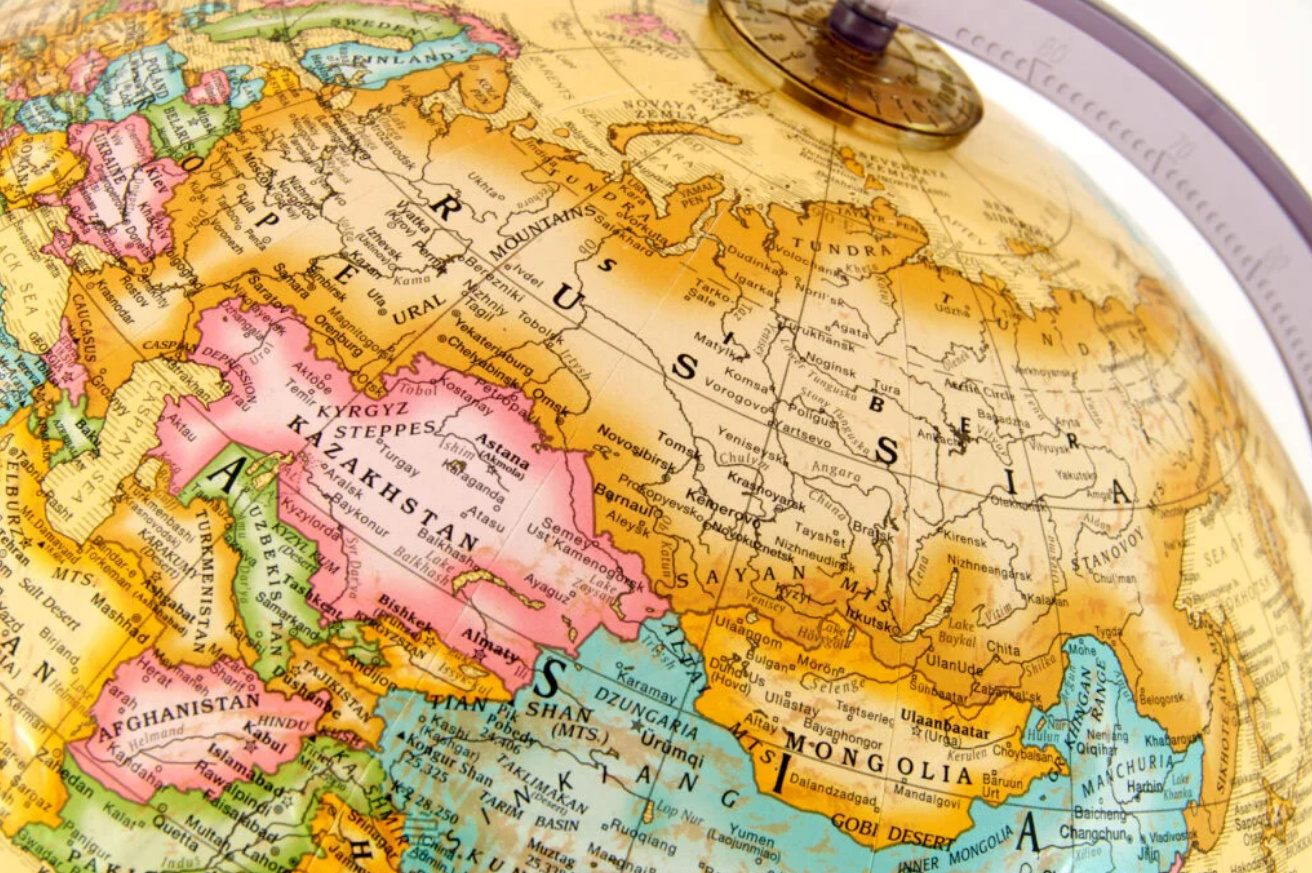
Shifts in the post-Soviet space
In the South Caucasus, Armenia currently finds itself caught between the West and Russia, more as a result of Moscow’s inaction than of any sustained engagement by European or American actors. For geopolitical and security reasons, Armenia remains one of the few post-Soviet states that, at least in part, still associates the Soviet legacy with stability and protection against external threats, in particular Türkiye. Yet Yerevan has grown increasingly disillusioned. Russia’s limited response during successive escalations in Nagorno-Karabakh, presumably constrained by the demands of its ongoing military campaign in Ukraine, and the perceived ineffectiveness of the Collective Security Treaty Organization (Russia’s answer to NATO) in providing meaningful support, have undermined confidence in Moscow as a reliable security guarantor.
The security architecture that once anchored Armenia firmly within Russia’s sphere of influence now appears uncertain, prompting a cautious recalibration of its foreign policy posture. Armenia’s decision to join the International Criminal Court was openly criticized by the Kremlin as a “wrong decision”, as it formally obliges Yerevan to arrest President Vladimir Putin should he set foot on Armenian territory, in line with the ICC’s arrest warrant issued in March 2023. Beyond its legal implications, the move can also be interpreted as an attempt by Yerevan to jolt Moscow out of its strategic inertia and signal growing dissatisfaction with Russia’s perceived disengagement from regional security commitments. However, this signalling strategy appears to have yielded limited results.
Recently, Armenian officials have signalled an increasingly cautious approach in managing relations with Moscow, reflecting a growing awareness of the limits of external support in the event of an open military conflict with Russia. This recalibration follows a series of inflammatory remarks by prominent figures in Russian state media, who have openly suggested that military force could be employed against countries within Moscow’s perceived sphere of influence, including Armenia, should they continue to distance themselves from the Kremlin’s orbit. In doing so, Moscow has once again missed an opportunity to rely on soft power, appearing, counterintuitively, more willing to contemplate coercive or even military pressure against one of its closest allies than to deploy meaningful security support in its defense against external threats.
This approach appears even less strategic in light of the steadily worsening tensions with Azerbaijan. The incident in which Russian air defenses mistakenly shot down an Azerbaijani passenger aircraft on the 25th of December 2024, after attempting to intercept Ukrainian drones, marked a turning point in the already fraught trajectory between the two states. Although President Putin later publicly acknowledged the mistake, relations have remained strained, with police raids targeting Azerbaijanis living in Russia and persistent mutual accusations in both the media and diplomatic channels. At the February 2026 Munich Security Conference, President Ilham Aliyev accused Moscow of deliberately targeting Azerbaijani diplomatic sites in Ukraine, despite Baku having provided Russia with the precise locations of its missions. The rapid deterioration in relations between the two countries becomes clearer when examined within the broader context of Russia-Türkiye relations and NATO dynamics, as Azerbaijan appears increasingly confident in adopting a more assertive posture toward Moscow, reassured by Ankara’s longstanding strategic backing and, more recently, by growing security cooperation with the United States.
Read also: What Putin wants and why Trump seems willing to go along with it
In this light, the February 11 visit by US Vice President J.D. Vance (who also visited Armenia the day before) could have tangible implications. During the visit, Washington and Baku formalized their ties through a Strategic Partnership Charter, providing a more structured, institutional framework for bilateral cooperation. President Aliyev described the agreement as ushering in a new phase in US-Azerbaijan relations, with the defence and security dimension particularly notable. Under the Charter, both countries plan to broaden “defense and security cooperation, including defense sales”, signaling a deepening of military ties. The recent agreements with Baku and Yerevan have strengthened American influence in the South Caucasus, giving it a more formal and visible structure. Their impact is unfolding on two levels: shaping domestic political and economic dynamics in Armenia and Azerbaijan and affecting the broader regional balance of power between the United States and Russia.
Within this evolving landscape, Georgia now emerges as the next actor seeking a place in the reconfigured regional order, navigating between Western aspirations and Moscow’s lingering influence. The 2024 Georgian elections, won by the Georgian Dream party and followed by large-scale protests in Tbilisi over claims of a “stolen vote,” highlighted deep political divisions within the country. Analysts have suggested that, paradoxically, Russia emerges as the primary beneficiary of the disputed outcome, leveraging election irregularities and extensive disinformation campaigns to consolidate its influence in the region. Once the South Caucasus nation most closely aligned with Brussels, Georgia now finds itself at a critical geopolitical crossroads. While its constitutionally enshrined goal of EU integration remains, the government has pursued a non-aligned, pragmatic approach toward Western sanctions on Russia, deepening economic ties with Moscow. This strategy has, in turn, heightened tensions with the EU, which is now contemplating measures against Georgian entities, amid suspicions of Russian oil sanction evasion.
In contrast to Georgia’s difficulty in distancing itself from Moscow, Moldova stands at the opposite end of the spectrum, pursuing an unequivocally Western trajectory despite sustained Russian pressure. During the still ongoing protests in Tbilisi, demonstrators flew the flags of Moldova and Ukraine alongside those of Georgia and the EU as an implicit recognition of Chisinau’s resilience in the face of Kremlin-led hybrid pressure. Despite Moscow’s extensive attempts to shape the outcome of the 2024 electoral cycle through large-scale vote-buying and sustained propaganda campaigns aimed at bolstering pro-Russian political forces, Moldova approved a constitutional referendum enshrining the objective of European integration.
Backed by a pro-European governing majority and political support from Brussels, the country is now advancing the formal steps required to complete its withdrawal from the Russia-led Commonwealth of Independent States – a move that constitutes a tangible strategic setback for Moscow in its relationship with Chisinau. At the same time, while Moldova has demonstrated notable cognitive resilience in the face of sustained Russian propaganda, its overall security environment ultimately remains underpinned by a more structural factor: the military resilience of its eastern neighbor.
As for the Central Asian states – Kazakhstan, Kyrgyzstan, Tajikistan, Turkmenistan, and Uzbekistan – they have increasingly embraced pragmatic, multi-vector foreign policies in response to the shifting regional environment. All five remain, to varying degrees, economically intertwined with Russia through trade, labor migration, and energy networks, while security cooperation continues to shape their defence outlooks. In some cases, structural vulnerabilities are particularly pronounced: Kazakhstan’s extensive land border with Russia and its sizeable ethnic Russian population, for instance, constitute potential vectors of political leverage in a more confrontational geopolitical climate.
Yet this interdependence has not translated into political alignment. While maintaining essential economic and security linkages with Moscow, the Central Asian republics have avoided endorsing the war in Ukraine, declined to recognize Russia’s territorial annexations, and sought to diversify their external partnerships. Engagement with China, Western actors, and regional powers such as Türkiye has intensified, reflecting a growing effort to reduce long-standing strategic reliance on Russia without precipitating a direct rupture.
The Ukrainian war: a strategic Russian miscalculation
Needless to say, Russia’s relationship with Ukraine has undergone a systemic rupture. What was once a dense web of economic ties, social connections, and industrial integration has been replaced by open, protracted war. Even more consequential is Ukraine’s transformation: after four years of large-scale conflict, it now stands on Russia’s border as possibly one of Europe’s most experienced, innovative, and resilient military powers – a formidable adversary.
More broadly, across the post-Soviet space, Moscow’s influence is steadily eroding. Its failure to prevent renewed conflict between Armenia and Azerbaijan has undermined its credibility as a security guarantor, while its sway over Georgia remains fragile amid ongoing popular protests. In Central Asia, governments hedge between Russia, China, the EU, Turkey, and the United States, while Moldova continues its resolute Western trajectory, strengthened by cognitive resilience and robust European support.
Read also: The unlearned lessons of war: Four years since the invasion of Ukraine
Russia’s core goal of halting NATO expansion has spectacularly failed: Sweden and Finland joined the alliance, with Finland alone more than doubling Russia’s NATO border. Moreover, Western sanctions and political isolation have forced Russia to pivot east, deepening its reliance on China for critical trade and creating structural imbalances that position Moscow as a junior partner.
Four years into the war, one fact is undeniable: Moscow’s failures have become Washington’s gains, and the erosion of Russian influence in the post-Soviet space leaves the door open for potential protracted conflicts as Russia seeks to reclaim lost ground.