Who pays for green energy? Cobalt, Congo and the politics of extraction
The global transition to clean energy depends on cobalt, a mineral extracted under some of the world’s least sustainable conditions. Yet public debate often reduces the issue to a binary choice between economic survival and environmental protection, obscuring the deeper structural tensions embedded in the transition itself.
The European Union set itself ambitious sustainability standards with the adoption of the 2019 EU Green Deal and its demanding targets, responding to growing societal pressure over climate inaction and environmental degradation. Decision makers at the EU level reacted, and when the political answer came, it was strong and decisive.
Efforts to reduce carbon emissions across industry, energy, and transport rapidly expanded demand for batteries, turning electrification into a central pillar of European decarbonization strategies. Electrification exposed Europe’s vulnerability and extreme reliance on third countries for both access to raw materials and their processing. This led to a new set of policies adopted in 2024, targeting critical raw materials and rare earths, but these measures were not sufficient and resulted in political backlash. Despite the positive intentions, Europe was not ready to implement them and had not planned enough. Industries were flooded with bureaucracy, and compliance costs they struggled to absorb, and the costs of the raw materials they needed to decarbonize their production were extremely high. Since 2019, as European industrial plants started to fire personnel or to shut down, competitiveness declined, and public opinion shifted; the focus remained largely on Europe’s industrial costs. Yet this perspective overlooks a more fundamental question: Who ultimately bears the social and environmental costs of the green transition, at least in the context of initial European policy framework?
Nowhere is this imbalance more visible than in the Democratic Republic of Congo, the world’s primary source of cobalt. The DRC is a land rich in minerals (cobalt, diamond, copper and gold worth $24 trillion, EU’s Generalized Scheme of Preferences), and accounts for over 70% of global cobalt extraction, a mineral essential to lithium-ion batteries used in electric vehicles, consumer electronics, and renewable energy infrastructure. Despite its centrality to the global battery economy, the DRC has captured little value from the cobalt boom. Instead, mining expansion has generated severe social and environmental externalities, raising questions about how the benefits of the transition are distributed. How and why is this happening?
Congo’s current role in the green transition reflects a longer historical pattern in which global technological advances have relied on extractive arrangements detached from local development. Under the Belgian rule, on February 5, 1885, King Leopold II established the Congo Free State and designated it as a personal possession and reduced Congolese people to slavery and to work for rubber extraction. The rubber was used to produce tires and fuel the mobility revolution. No benefit was left to locals. Even in the post-colonialist period the situation was very unstable. After several conflicts, Mobutu Sese Seko came to power in 1965 and nationalized the mining industry, but the fragile institutions and the widespread corruption did not allow the nation to flourish. Today, the actors in the region have changed, as well as the business, but the resource wealth has not turned translated into prosperity.
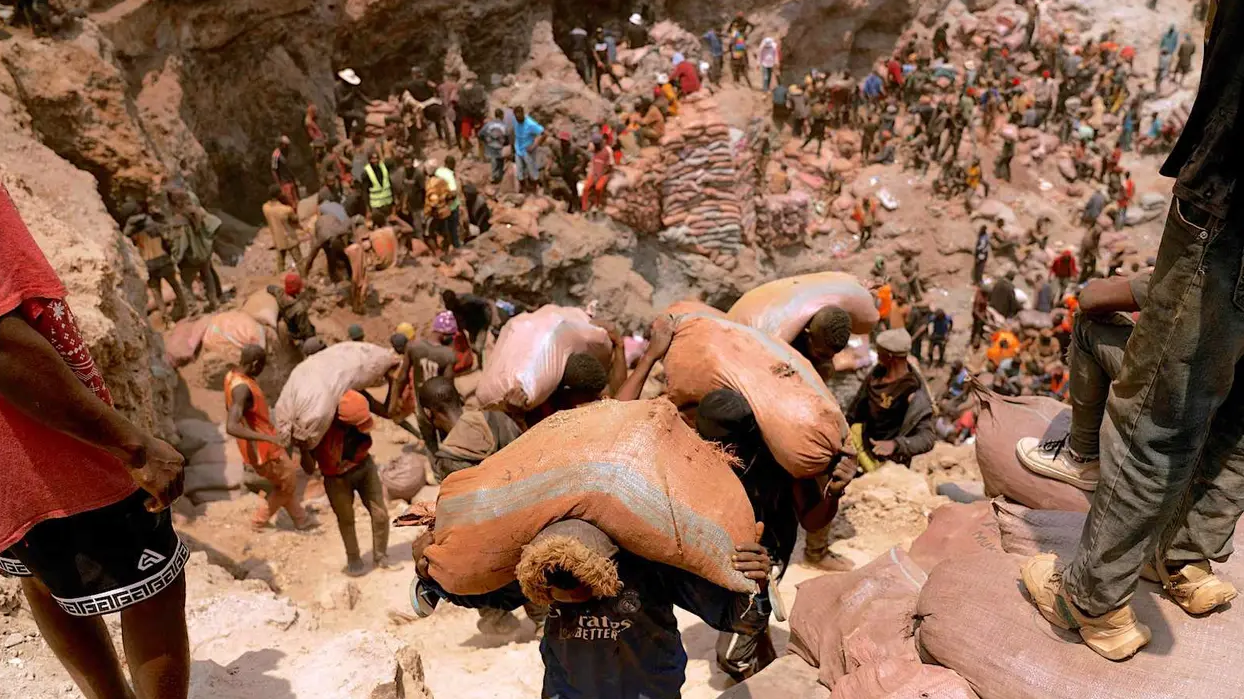
Cobalt extraction in the DRC takes place through two parallel systems: industrial and artisanal mining. The first term refers to the large-scale mining operations characterized by mechanized processes, sophisticated technology, and corporate management structures; the latter instead refers to small-scale, typically informal, labor-intensive, and community-based mining operations. This traditional form of resource extraction relies primarily on manual methods, with miners using hand tools, simple equipment, surface digging techniques, and river panning to extract precious metals from the earth. For decades, artisanal mining has been considered as a local business practice, but the dangers related to it are numerous: It exposes workers to severe safety and health risks, including prolonged contact with toxic materials and frequent accidents in unstable shafts. Operating outside formal labor frameworks, miners receive minimal compensation (from $2 to $3 dollars a day) while bearing the full human cost of extraction.
Beyond its human cost, cobalt extraction has generated profound environmental damage that extends well beyond mine sites. Both industrial and artisanal operations have contributed to soil contamination, water pollution and deforestation, undermining agricultural livelihoods in surrounding communities. In mining regions, farmland has been rendered unproductive by toxic runoff, while entire villages have been displaced to make way for expanding concessions, often without adequate compensation or viable alternatives. As a result, mining has not only transformed landscapes but has also eroded food security and intensified dependence on informal extraction, reinforcing a cycle in which environmental degradation and precarious labor feed into one another.
The southeastern area of the country, neighboring Zambia, has the highest concentration of cobalt, and it is called the Copperbelt. Control over the mineral-rich Copperbelt has generated regional friction. While Zambia and the Democratic Republic of Congo share an integrated copper–cobalt basin rather than an open military confrontation, competition over investment, transport corridors, and downstream value capture has intensified as global demand rises. More acute instability lies on the Congolese Rwandan side of the border, where armed groups, most notably the M23, widely reported to be backed by Rwanda, have periodically destabilized eastern regions adjacent to key transit routes. Within this fragmented security environment, thanks to its high-risk tolerance policy, China has been able to position itself as main investor and partner. Benefiting from state-backed financing under the “Go Out” strategy since the late 1990s, Chinese state-owned enterprises have positioned themselves as dominant investors across the sector. From fewer than 40 overseas mines in 1999 to over 1,200 by 2022, this expansion, combined with decades of industrial relocation and technology transfer of western companies, has allowed China to gain domestic expertise and now it refines more than 70% of the world’s cobalt, consolidating its central role in the global battery economy.
China’s involvement in the region remains ambivalent. On the one hand, Chinese investment has expanded production capacity, created employment, and sustained industrial activity in contexts shunned by more risk-averse actors. On the other, surveys by leading African extractives experts point to the significant involvement of Chinese-linked operators in practices associated with environmental degradation, illicit mining, forced evictions without adequate relocation, and labor conditions operating outside enforceable standards. This ambivalence adds a further layer to the cobalt supply chain: China is almost entirely reliant on the DRC for cobalt extraction, while Europe depends on Congo for raw materials and on China for processing. The EU import trade flow from Congo of fuels and mining products such as copper, cobalt, and gold is 91.5% (2024 data).
For decades, this Congo–China nexus has quietly sustained the global technology industry. Western tech giants have purchased refined cobalt while remaining largely insulated from the conditions under which it was extracted. This detachment cannot be explained by negligence alone. It is also the product of a highly fragmented supply chain in which minerals from industrial concessions are routinely blended with those originating from artisanal sites before reaching exporters, effectively erasing their provenance. International organizations have repeatedly exposed the human cost of this opacity, prompting legal actions against several US technology firms. Following legal prosecutions and investigations carried out by non-governmental organizations, some companies, including Apple, Dell and Tesla, suspended sourcing from the DRC. Yet these withdrawals amounted to reputational risk management rather than structural engagement, leaving the underlying extraction regime fundamentally unchanged.
The tireless work of NGOs and independent experts, most notably Siddharth Kara, whose book ‘Red Cobalt’ forced the issue into the international spotlight, gradually pierced this wall of indifference. With the re-election of President Félix Tshisekedi in December 2023, the cobalt question moved from the margins to the center of Congolese political discourse. In repeated public statements, Tshisekedi denounced a system in which foreign companies accumulated wealth while Congolese communities bore the costs and vowed to reclaim state authority over territories controlled by rebel and paramilitary groups such as the M23. His ambition was clear: to restore sovereignty and reposition the DRC as a central actor in the global economy by leveraging its mineral wealth.
Yet ambition alone proved insufficient. Earlier this year, parts of the Copperbelt and surrounding strategic corridors fell under the de facto control of the M23, plunging the region into renewed violence and exposing the limits of Kinshasa’s authority. Faced with mounting insecurity and the risk of losing control over critical mining areas, the Congolese government turned outward. Seeking to diversify its partnerships, Tshisekedi engaged Washington, signaling openness to a security-for-resources arrangement clearly inspired by the deal the Trump administration had pursued in Ukraine.
This diplomatic shift marked the return of the United States to a region it had long approached with caution. American companies had largely avoided large-scale investment in the DRC, deterred by security risks and by the reputational costs associated with so-called “blood minerals”. US mediation nonetheless contributed to a fragile de-escalation, culminating in a peace and cooperation agreement between Rwanda and the DRC signed on 27 June. Whether this stabilization will endure remains uncertain. What is clearer is that Washington has re-entered the strategic game, which raises an unavoidable question: Where, in this rapidly reconfigured landscape, does Europe stand?
Europe has remained largely absent from both conflict resolution and the legal scrutiny prompted by NGOs; yet Europe is the region most dependent on critical raw materials, with a direct interest in a stable Congo and a secure cobalt supply chain. More than 20 years after China began its strategic engagement, Europe launched the Global Gateway strategy, with a stated focus on the DRC and its mineral wealth. However, the EU faces deep political challenges. Credibility must first be restored: Decades of colonial entanglement, abrupt disengagement, indifference, and intermittent re-entry driven by economic need have left a legacy of suspicion.
European engagement has often taken the form of conditioned loans and project-based investments. In practice, however, these flows have rarely improved living or working conditions for miners, reinforcing perceptions of the DRC as a “green sacrifice zone” – a territory exploited for the benefit of distant economies while local populations bear the social and environmental costs. Questions also linger over scale: The Global Gateway mobilizes €300 billion, yet given the strategic stakes in the region, investment could be far higher.
By contrast, China has paired land acquisition with infrastructure development, embedding long-term leverage while fostering tangible local outputs. For Europe to preserve credibility and avoid accusations of neo-colonialism, it must adopt a similar approach. One such effort is the ambitious Lobito corridor, designed to link Kolwezi, at the heart of the cobalt-mining region, to the Angolan port of Lobito. Multiple Member States and external actors are involved, yet coordination challenges and resource bottlenecks continue to slow progress.
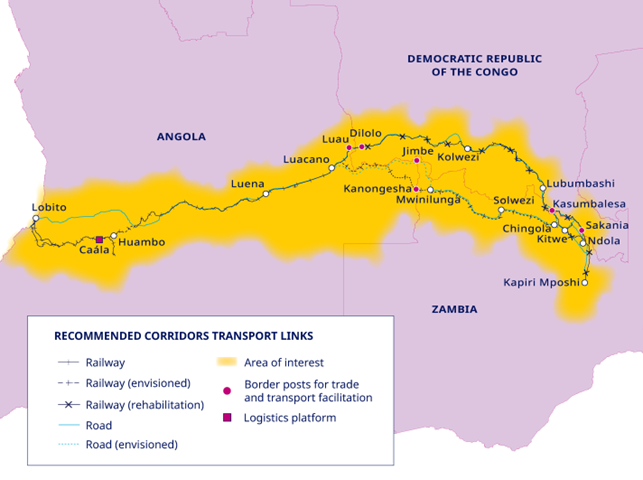
Meanwhile, local populations remain without critical infrastructure, artisanal miners continue to endure exploitative conditions, and the West persists in sourcing cobalt largely without accountability.
As global demand for cobalt began to outpace local supply, President Tshisekedi and his government struggled to assert control over the mineral-rich regions. In February 2025, the DRC imposed an export ban, briefly paralyzing the battery economy and opening the door to irregular and clandestine activity. The ban has since been lifted, replaced by a new regulatory framework. On November 26, 2025, a government circular established export quotas and detailed management rules: Miners must pay a 10% royalty upfront within 48 hours, obtain quota verification certificates, submit to physical inspections, and comply with multi-agency oversight. On paper, the system signals stronger state control. In practice, in a market where demand for cobalt is projected to increase sixfold by 2040 for the electric vehicle sector alone, it is unlikely to resolve the structural imbalance. Upfront payments and bureaucratic complexity favor large corporations, while artisanal miners are increasingly pushed to the margins. Without deep institutional reform in a landscape marked by entrenched corruption, the dangerous, exploitative circuits of artisanal mining are almost certain to persist, continuing to feed a global industry that benefits at the expense of Congo’s people and environment.
The EU has the potential to address the situation by intervening on both a political and humanitarian level. Politically, the EU should stand for Congo’s sovereignty. The constant attack of the M23, backed by Rwanda, have exacerbated tension in the area and destabilize the presence and legitimacy of Kinshasa in the region. Serious and clear action could be taken to limit Kigali’s intervention. Sanctions interrupting ongoing military and commercial agreements could be put into place to send clear message to Kigali’s leadership. Financial aid to Rwanda could be conditioned to the dismantling of the militias operating in the region. However, every step aimed at containing Rwanda’s ambitions on Congo should be coordinated with the United Arab Emirates – a close partner of Kigali’s government.
Moreover, the EU’s Global Gateway strategy provides an opportunity to make strategic, forward-looking infrastructure investments that strengthen local governance, enabling authorities to monitor the region more effectively and report anomalies to central administrations. Well-developed, widespread infrastructure would also enhance the operational capacity of NGOs and other stakeholders. By reducing informational and operational gaps, such investments would facilitate more effective human rights monitoring and oversight.