How India looks at China: dealing with uncertainty
This year’s annual Shanghai Cooperation Organisation (SCO) summit (August 31 – September 1), which was immediately followed by a large-scale military parade (September 3) in Beijing marking the defeat of Imperial Japan in World War II, was like no other. The Chinese paramount leader Xi Jinping was not shy about his country’s global ambitions, nor was he coy with fellow global leaders in attendance. Heralding a new era, Xi rolled out his most complete blueprint yet of China’s Global Governance Initiative, which aims to overhaul the 21st century international system.
Accordingly, the SCO Summit issued a lengthy communique along with 20 joint statements on a whole range of strategically vital issues, from international trade to artificial intelligence to green industries. Xi’s bearhug of his Russian (Vladimir Putin) and North Korean (Kim Jung-Un) counterparts predictably grabbed the global headlines, but the more important confab was arguably among the leaders of the world’s three most powerful non-western nations during the SCO summit.
For the first time in seven years, India’s prime minister, Narendra Modi not only visited China, but also hailed the overall trajectory of increasingly “fruitful” bilateral ties, which are ostensibly based on “mutual respect, mutual interest and mutual sensitivity”. China’s charm offensive included its unequivocal condemnation of the terror attacks in Pahalgam in Kashmir earlier this year, which, according to Delhi, was backed by elements inside Pakistan, a key Chinese strategic partner – and triggered a massive yet short-lived conflict between the two South Asian juggernauts. To sweeten the deal, the two countries also resumed direct flights after half-a-decade of hiatus.
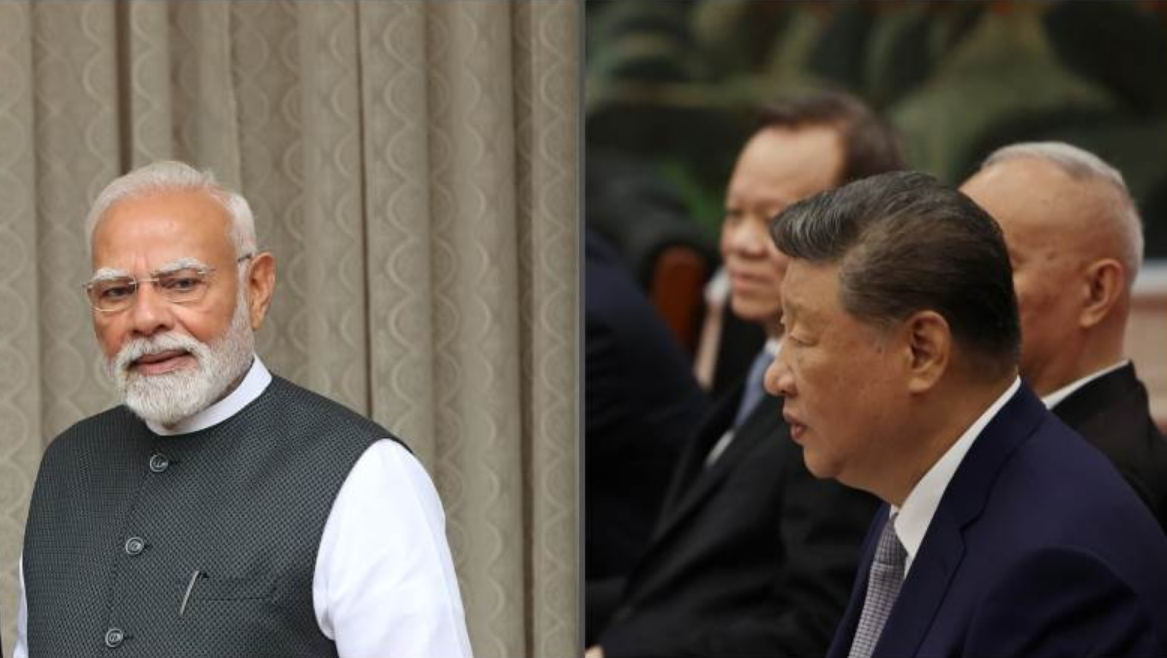
Upon close examination, however, the newfound strategic romance between India and China seems more tactical-situational rather than strategic. India’s latest moves came on the heels of rising tensions with the United States over President Trump’s crushing tariffs, which have embittered the seemingly promising bilateral ties – and even thrown the future of Delhi’s place in the Quadrilateral Security Dialogue (Quad) grouping into doubt. It also reflects the Modi administration’s pragmatic recalibration in an era of acute geopolitical uncertainty and growing domestic unpopularity.
Nevertheless, Sino-Indian ties will continue to suffer from structural tensions, due to unresolved territorial disputes as well as Delhi’s lingering concerns over severe power imbalance vis-à-vis its East Asian counterpart. Moreover, India will likely double down on its tried-and-tested ‘multi-alignment’ strategy by strengthening ties with immensely diverse likeminded powers. In particular, partners in Europe, the Middle East and Southeast Asia will be crucial to India’s long-term development and, more broadly, the creation of a more symmetrical multipolar order that is neither dominated by the West nor China.
The Trump Factor
The timing of India’s ostensible rapprochement with China is quite telling. It came on the back of a series of real and perceived mishaps by Washington. First came the US President’s self-aggrandizing claim of brokering a ceasefire between Pakistan and India. This ended up embarrassing the Modi administration, which had flatly rejected any claim of third party mediation that would imply a military deadlock and, worse, a failed attempt by India to subdue its much smaller rival.
To make matters worse, Trump commenced an unexpected period of strategic flirtation with the Pakistani leadership, which, unlike India, nominated him for Nobel Peace Prize. The final straw, however, was the US’ decision to impose 50% punitive import tariffs on India, citing the latter’s massive purchase of Russian oil amid the ongoing Ukraine conflict. “India acts as a global clearinghouse for Russian oil, converting embargoed crude into high-value exports while giving Moscow the dollars it needs,” argued Peter Navarro, Trump’s top trade adviser, in an op-ed in The Financial Times. No comparable sanctions were, however, imposed on other major customers of Russian oil, most notably Türkiye.
Over his social media network, Truth Social, Trump poured gasoline on fire by declaring: “ “I don’t care what India does with Russia…They can take their dead economies down together, for all I care.” The Indian Prime Minister fired back with characteristic defiance and patriotic chest thumping: “All of us should follow the mantra of buying only ‘made in India’ goods…Pressure on us may increase, but we will bear it.” To add insult to injury, the US also revoked the existing sanctions waiver on India’s multi-billion project in the Iranian port of Chahbahar, which was supposed to enhance Delhi’s strategic depth in the Middle East and, crucially, create an alternative logistical hub to the China-backed Gwadar port in Pakistan.
Strategic Indeterminacy
The episode marked a sudden end to a decade of steady improvement in US-India relations, especially amid shared concerns over a rising China. By symbolically embracing China and Russia, the Indian leadership is intent on telegraphing its discontent with America’s foreign policy direction. Nevertheless, this seems more tactical than a fundamental reorientation in India’s global alignments.
To begin with, India continues to suffer from acute strategic insecurity vis-à-vis China. Though both are seen as the juggernauts of the 21st century, the asymmetry in power is considerable. Though boasting similar population sizes, China’s GDP is almost five times larger than that of its South Asian counterpart. The gap is even more yawning in per capita income, with China on the cusp of becoming a “high income” economy while India is still stuck in the low-middle income status.
China is not only a global manufacturing powerhouse, but it is also now directly competing with, if not dominating, the West and Japan across a whole range of critical technologies. In contrast, India is still transitioning from a lower-end service-oriented economy to a more manufacturing-driven one. The economic gap has clear military implications: China (with $314 billion) spent almost four times more than India (with $86 billion) on its defense sector last year. The qualitative difference is also clear: Beijing has multiple indigenously-built 5th generation fighter jets on top of the world’s largest naval fleet.
Against the backdrop of multiple clashes along their Himalayan borders in the past decade, including deadly skirmishes in 2020, India will remain acutely insecure about China’s edge in military, technological and overall economic prowess. Add to this, Pakistan’s surprisingly strong performance during its latest clashes with India, partly thanks to Chinese weapon systems.
Read also:
Water conflicts heat up in the Himalayas
What India wants: global influence and freedom of choice
In short, Delhi is locked into an asymmetrical and structurally insecure strategic equilibrium with China, which is also rapidly expanding its influence across South Asia and the Indian Ocean. Thus, the most likely foreign policy direction of India in the coming years is to double down on its ‘multi-alignment’ strategy, which has proved particularly fruitful.
On one hand, India will continue to position itself as an alternative manufacturing hub for Western companies, which are seeking to partially decouple from China. India’s demographic dividend and improved basic infrastructure places it in a strong position to attract increasingly sophisticated investments under the aegis of a reinvigorated industrial policy.
Crucially, India is also strengthening its domestic defense industry through exports to likeminded nations. Aside from expanding its naval presence in China’s backyard, India is also arming the Asian power’s rivals in the South China Sea as through exporting advanced strategic weapons, including the Brahmos missile system, to the Philippines — and likely Vietnam and Indonesia too, down the road.
India continues to be prized as a vital partner for other major US allies. While Japan and Australia will remain invested in the Quadrilateral Security Dialogue (Quad) with India out of their shared concerns over China, the European Union (EU) and the United Kingdom are also rapidly expanding trade, including the newly-implemented EU-India free trade pact, as well as defense cooperation with Delhi, which has increased its imports of high-end European (as well as Israeli) military equipment. This has gone hand in hand with India’s deft ability to simultaneously deepen ties with rival energy powers of Russia, Saudi Arabia, the United Arab Emirates, and Iran.
Ultimately, India sees itself as one of the pillars of an emerging post-American multipolar order. China, which seeks to create a new order in its own image, will inevitably be both a rival as well as an obstacle to India’s vision. By maintaining fruitful ties with a full range of likeminded powers, therefore, Delhi can enhance its strategic autonomy, close its development gap with China, and strengthen its defense capabilities in an increasingly uncertain international environment.